



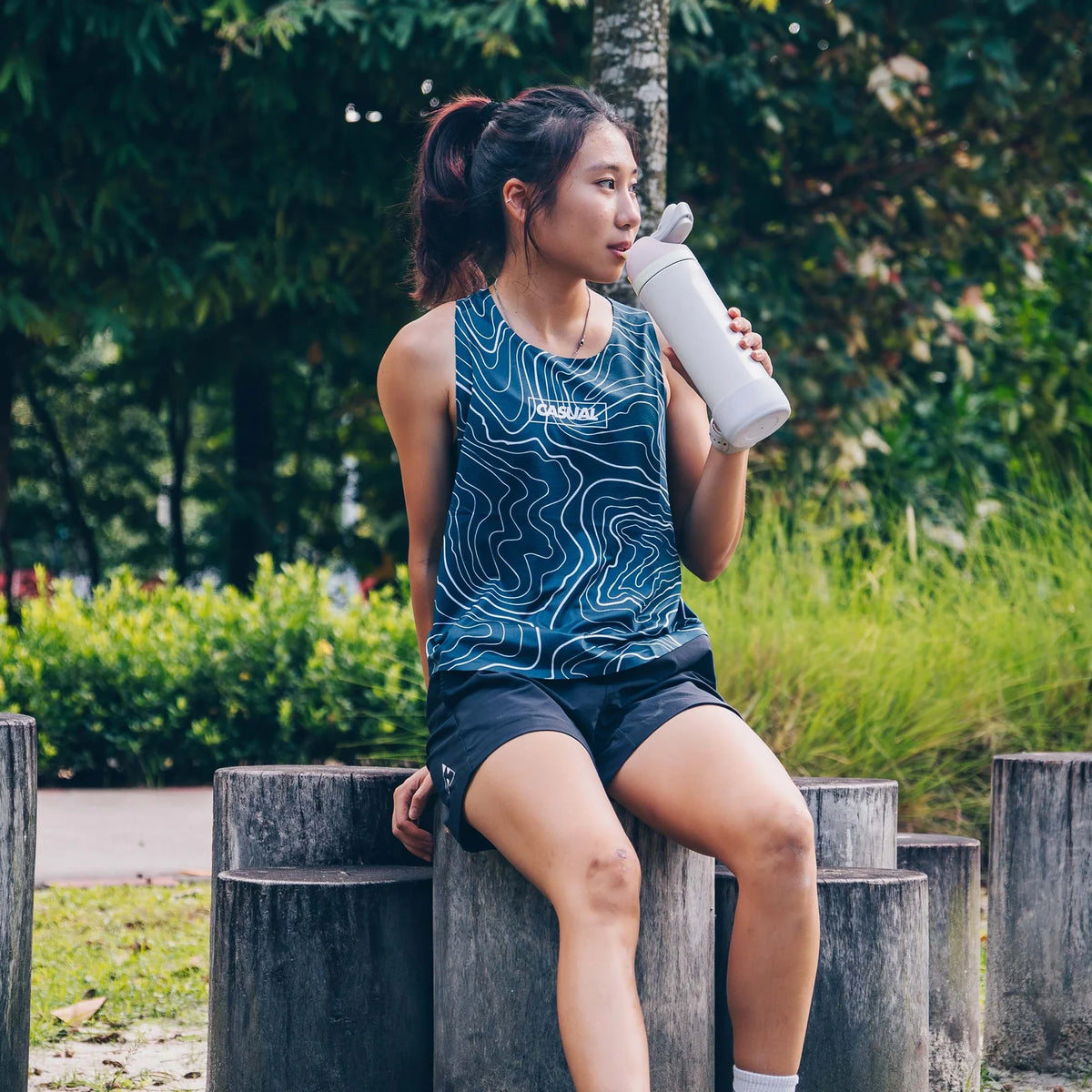
Climbers in Singapore lose water faster during a session than climbers in almost any other climate. High ambient humidity means sweat evaporates more slowly, so your body compensates by sweating more to achieve the same cooling effect. The result is that a session which might feel moderate in a cooler, drier gym can leave you significantly more dehydrated here, often without it feeling obviously different in the moment.
This article covers why hydration matters more in humid conditions specifically, general guidance on how much to drink, and the signs that you're falling behind on fluids during a session.
Why Humidity Changes the Hydration Equation
Sweat cools the body through evaporation. In low humidity, sweat evaporates quickly and efficiently, so a relatively small amount of sweat provides meaningful cooling. In high humidity, the air is already close to saturated with moisture, which slows evaporation significantly. Your body's response is to produce more sweat to try to achieve the same cooling effect, since the sweat that isn't evaporating isn't cooling you at all.
This means a session in a humid Singapore gym can involve considerably more fluid loss than an equivalent session, at equivalent intensity, in a cooler and drier climate. Because this sweat often feels less immediately obvious than it would in a breezier or drier environment, it's genuinely easy to underestimate how much fluid you're losing during a session.
General Hydration Guidance
Broad, general guidance suggests aiming for roughly 2 to 3 litres of water across a full day for a typical adult under normal conditions, with additional intake needed around exercise. For a climbing session specifically, drinking water in the hours leading up to your session, small amounts throughout the session itself, and rehydrating afterward is a reasonable general approach.
These figures are general population guidance, not individually tailored targets — actual needs vary by body size, sweat rate, session intensity, and overall diet. If you want a more precise, personalised figure, a sports dietitian or doctor can help calculate that based on your specific circumstances.
Drinking During a Session
Small, regular sips between attempts work better than large volumes consumed infrequently. Drinking a large amount of water in one go, particularly if you then go straight back to climbing, can cause stomach discomfort during the compressed body positions climbing often requires.
A practical approach: keep a water bottle at your resting spot and take a few sips during natural breaks — between attempts, while resting your forearms, while watching someone else climb. This spreads intake across the session rather than trying to catch up all at once, and it's easier to sustain over a two or three hour session.
Signs You're Falling Behind on Fluids

Thirst is a reasonable general indicator, though by the time you feel distinctly thirsty, you're often already somewhat behind on fluid intake — it's a lagging signal rather than an early warning. Other signs worth paying attention to include a headache developing partway through a session, unusual fatigue that feels disproportionate to how hard you've actually been climbing, or reduced concentration and coordination that isn't explained by normal physical tiredness.
Urine colour is a commonly used general indicator outside of a session — pale yellow generally suggests reasonable hydration, while noticeably dark urine suggests you're under-hydrated relative to your needs. This isn't a precise medical measure, just a rough, accessible signal most people can use without any special equipment.
Electrolytes in Humid Conditions
Sweat contains not just water but electrolytes — primarily sodium, along with smaller amounts of potassium, magnesium, and other minerals. In sustained, heavy sweating conditions like a long session in a humid Singapore gym, electrolyte loss alongside water loss is a real consideration, particularly for longer or more intense sessions.
For most recreational climbers doing sessions of one to two hours, plain water combined with normal meals is generally sufficient to replace what's lost, since a typical diet already provides adequate sodium and other electrolytes. For longer sessions, particularly multi-hour training blocks or back-to-back sessions in a single day, some climbers find electrolyte-containing drinks helpful for maintaining performance and comfort, though this varies by individual and isn't a strict requirement for most casual climbing.
Hydration and Skin
Hydration status has some connection to skin condition, though it's one factor among several — chalk use and moisturising habits generally have a more direct and significant impact on climbing skin than hydration alone. That said, being generally well-hydrated supports overall skin health, which is a reasonable complement to the more direct skin care habits — filing, washing, moisturising — covered in this journal's skin care guide. For the full picture on managing climbing skin, see the complete guide to climbing skin care in humid conditions.
Practical Habits for Humid Gym Sessions
Bring a water bottle to every session rather than relying on being able to buy one at the gym. Start the session already reasonably hydrated rather than trying to make up for a dehydrated start. Take small sips regularly rather than large amounts infrequently. For sessions longer than roughly ninety minutes to two hours, consider whether an electrolyte drink might be useful, particularly if you're a heavy sweater or the session is unusually intense.
After the session, continue rehydrating rather than assuming the water you drank during climbing was sufficient — fluid losses from a hard session in humid conditions often aren't fully replaced by the time you finish climbing.
Key Takeaways
- Humidity slows sweat evaporation, so your body sweats more to achieve the same cooling — fluid losses are higher than in drier climates
- General guidance suggests roughly 2–3 litres of water daily, with more needed around exercise — individual needs vary
- Small, regular sips during a session work better than large infrequent amounts
- Thirst, headache, unusual fatigue, and reduced concentration are all signs you may be behind on fluids
- Electrolyte drinks are worth considering for longer or more intense sessions, though plain water and normal meals suffice for most casual climbing
- Continue rehydrating after your session — losses from a hard humid session often aren't fully replaced during the climb itself

Share:
What to Eat Before a Climbing Session
Should Climbers Eat Light to Climb Better?