



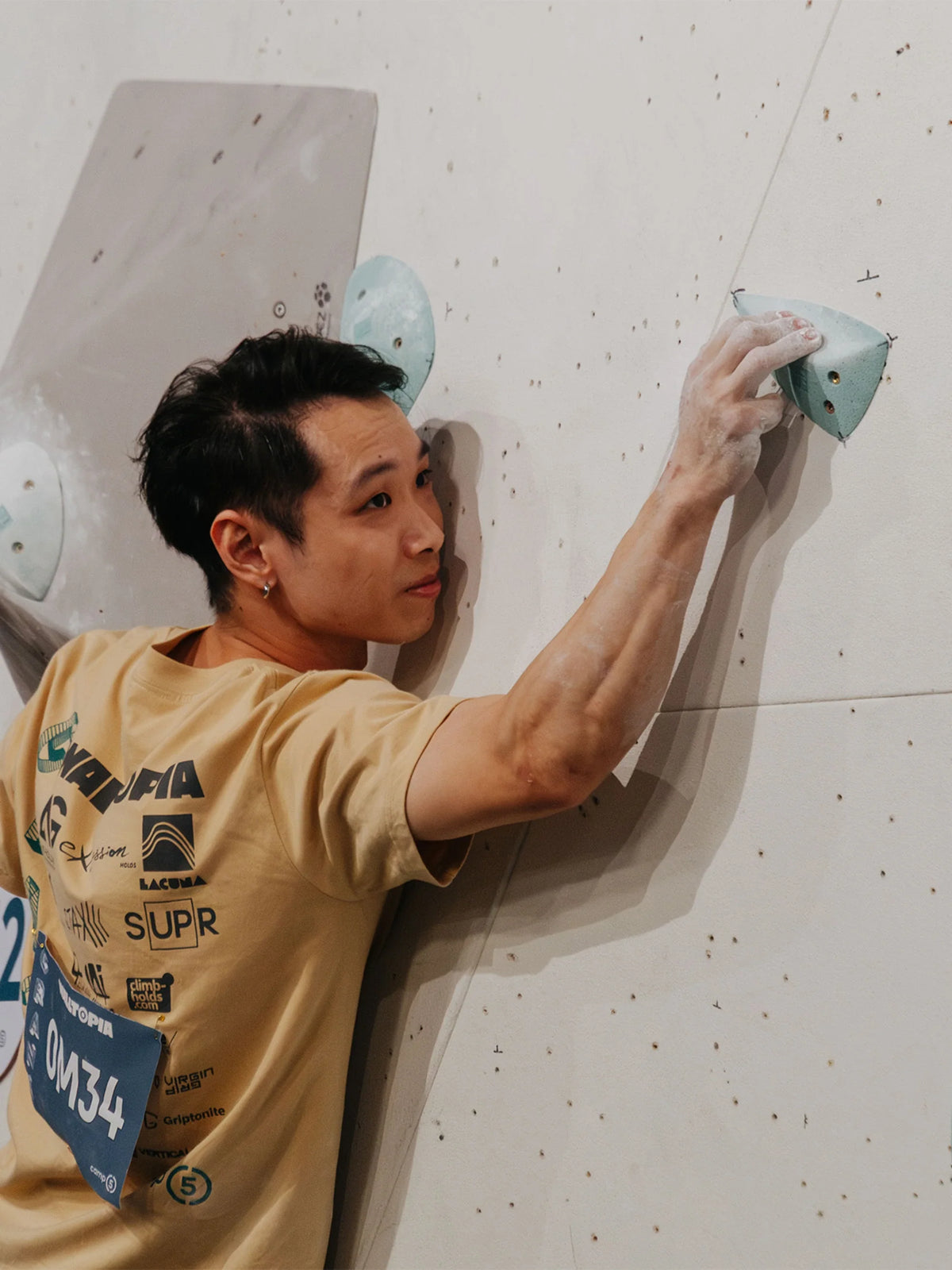
Every climber knows the feeling. One week you're climbing the best you ever have, linking moves you couldn't touch a month ago. The next week, the same climbs feel impossible, and you're not sure what changed.
If that's you right now, take a breath. You're not declining. You're not "getting weaker." You're going through something every climber goes through, from first-month beginners to people who've been climbing for a decade: progress in climbing isn't linear. It comes in waves.
The frustrating part is that the dips rarely feel like part of a wave while you're in them. They feel like going backwards. Understanding what's actually happening underneath is the first step to getting through it without losing your love for climbing along the way.
Why Plateaus Happen
Plateaus aren't random, and they're rarely about a lack of effort. Most of the time, one of these is going on:
- Your current movement habits have reached their limit. The way you climb has carried you this far, but habits that worked on easier problems — pulling hard, relying on strong holds, muscling through awkward positions — stop scaling once the climbs get harder.
- Your technique can't support harder climbs yet. Strength can only cover for technique up to a point. Past that point, the problems simply demand cleaner footwork, better body positioning, or smarter sequencing, and no amount of extra pulling makes up the gap.
- Your body is adjusting and integrating new skills. Learning a new movement pattern isn't instant. Your body often needs time to absorb what it's been practising before it shows up reliably on the wall, which is why a skill can feel shaky for weeks and then suddenly click.
- Your mind is processing new movement patterns. Climbing is as much a mental skill as a physical one. When you're learning to read, sequence, and commit to moves differently, there's often a stretch where it feels worse before it feels better, simply because you're no longer climbing on autopilot.
Seen this way, a plateau isn't a sign that you've stopped improving. It's often the stretch right before things move up a level — if you know how to respond to it.
What Plateaus Really Mean

A plateau is not a wall. It's a mirror.
It reflects your current limitations back at you, and most of what shows up is useful information. It shows you where your movement is inefficient, where you're spending energy that doesn't need spending. It shows you timing issues, the moves where you pull a beat too early or commit a beat too late. It shows you the footwork habits you've been getting away with on easier climbs, and the mental patterns, like hesitating, rushing, or climbing scared, that only become visible once the problems get hard enough to expose them.
Plateaus don't say "stop." They say: it's time to climb smarter.
How to Break Through Plateaus
The instinct when you're stuck is to push harder: more sessions, more attempts, more frustration. That rarely works, and it often makes things worse, especially when tired fingers and a tired head turn a plateau into an injury or a burnout.
You don't push harder. You refine.
Stop grinding the same mistakes and start analysing your movement. Small changes can have a surprisingly large impact, and the best place to start is with honest questions you ask yourself on the wall:
- Are my hips over my feet? If your weight is hanging off your arms instead of sitting over your feet, you're working far harder than you need to on every single move.
- Am I pulling too early? Many climbers start pulling before their body is actually in position for the move, which wastes energy and makes reaches feel longer than they are.
- Is my timing off? Moves have a rhythm. Going too slowly through a dynamic move, or too quickly through a precise one, can turn a manageable sequence into an impossible one.
- Am I overgripping? Squeezing holds harder than necessary burns out your forearms early and makes your whole body tighter. Often a hold only needs half the grip you're giving it.
- Am I climbing anxiously instead of intentionally? Fear and pressure tighten everything. Climbing with a clear intention for each move feels completely different from climbing while bracing for failure.
You don't need to fix all five at once. Pick one, pay attention to it for a full session, and see what changes. This is how real improvement starts: not through a dramatic breakthrough, but through noticing one small thing at a time.
The Aruta Academy Perspective

At Aruta Academy, we treat plateaus like data points, not failures.
When a climber comes to us stuck, we start by diagnosing how they actually move, because what a climber thinks is holding them back and what's actually holding them back are often different things. From there we identify the hidden inefficiencies that have been quietly costing them energy, rebuild their movement foundation where it needs rebuilding, and teach the awareness and strategy that let them keep improving after the session ends. Then we give them a structured progression so they know what to work on next, rather than guessing.
Our climbers don't "try harder." They learn to move better, and progress follows naturally.
Ready to break your plateau? Join our free trial session and let us help you find what's really holding you back.


Share:
Climbing Is About Having Fun — Not Just Chasing Progress