
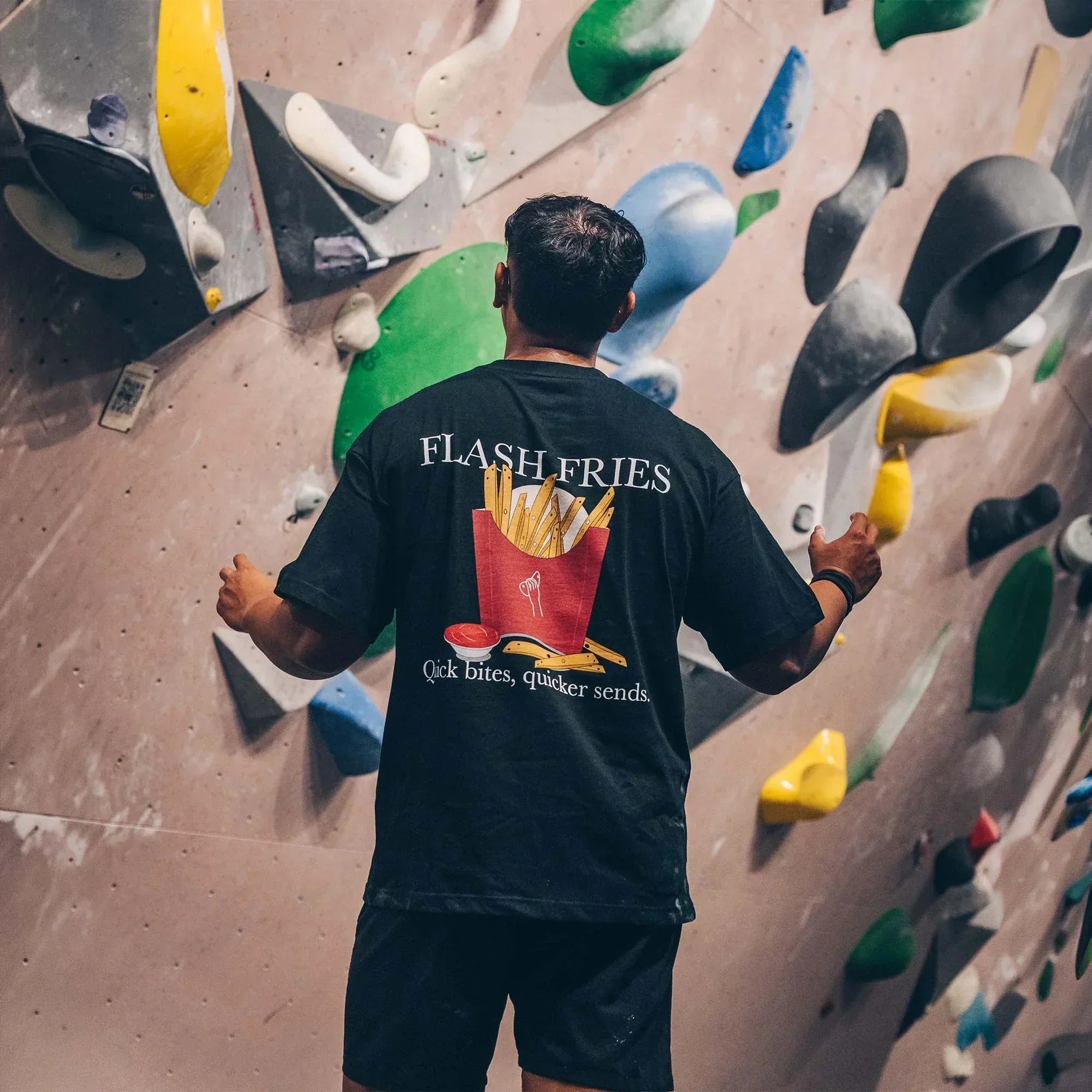
Watch an experienced climber approach a new problem and you'll notice they don't just walk up and start climbing. They stand at the base, look at the holds, trace a path with their eyes, sometimes mime a move with their hand in the air. This is reading the problem — working out the sequence before committing physically — and it's one of the most underrated skills in bouldering.
Beginners often skip this step entirely, climbing on instinct and figuring things out hold by hold. That works on easy problems but becomes a limiting habit as difficulty increases. Learning to read a problem before climbing it saves energy, prevents wasted attempts, and is often the difference between solving a problem and getting stuck on it indefinitely.
What Reading a Problem Actually Means
Reading a problem is the process of looking at the holds, the wall angle, and the spacing between them, and forming a hypothesis about how to climb it before you start. It includes identifying which holds you'll use for hands and which for feet, what order you'll use them in, and where the difficult sections — the parts requiring the most strength or precision — are likely to be.
This isn't about solving the entire problem perfectly from the ground. Even experienced climbers often get parts of their read wrong and adjust mid-climb. The value is in starting with a plan rather than no plan — a flawed plan you can adjust is far more efficient than improvising from scratch on every move.
Identifying the Holds

Start by identifying every hold that belongs to the problem — usually marked by colour, tape, or a number tag depending on the gym's system. Note the start holds specifically; most gyms require both hands to begin on marked start holds, and getting this wrong means restarting.
Look at each hold's shape and orientation. A hold that's clearly meant to be gripped from below reads differently than one meant to be pinched from the side or pressed down on top. Holds shaped like jugs — with a clear lip to wrap fingers around — are usually intended as rest points or transition holds. Smaller, angled holds often mark the harder sections of the problem, since route setters use difficulty progression deliberately.
Pay attention to footholds as much as handholds. Beginners tend to focus entirely on where their hands will go, but foot placement is often what makes a sequence possible or impossible. If a hand move looks like a big reach, check whether there's a foothold positioned to give you the height or body position needed to make that reach manageable.
Reading Body Position
Once you've identified the holds, think about how your body needs to be positioned to use them effectively. This is the harder part of reading a problem and improves significantly with experience, but a few principles help even as a beginner.
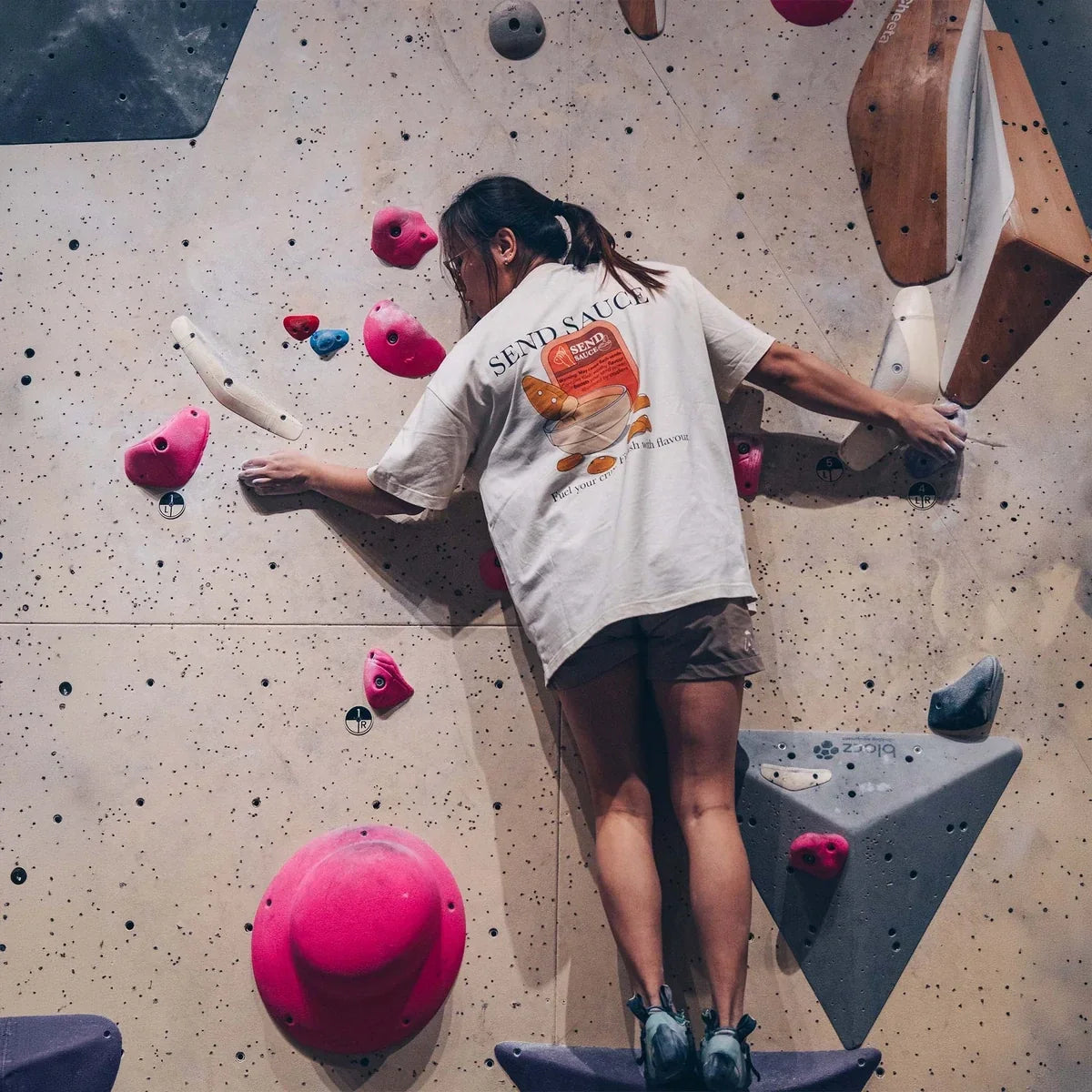
Holds that are off to one side usually require you to turn your hip into the wall — climbing with your body angled rather than square to the wall — to reach them efficiently. If a handhold is far to the right, check whether there's a foothold that lets you step your right foot up and turn your hips, rather than trying to reach with your arm alone while staying square to the wall.
Look for opportunities to use your legs to generate the height or reach you need, rather than pulling with your arms. A move that looks impossible as a straight pull often becomes manageable once you spot the foothold that lets you push up into position first.
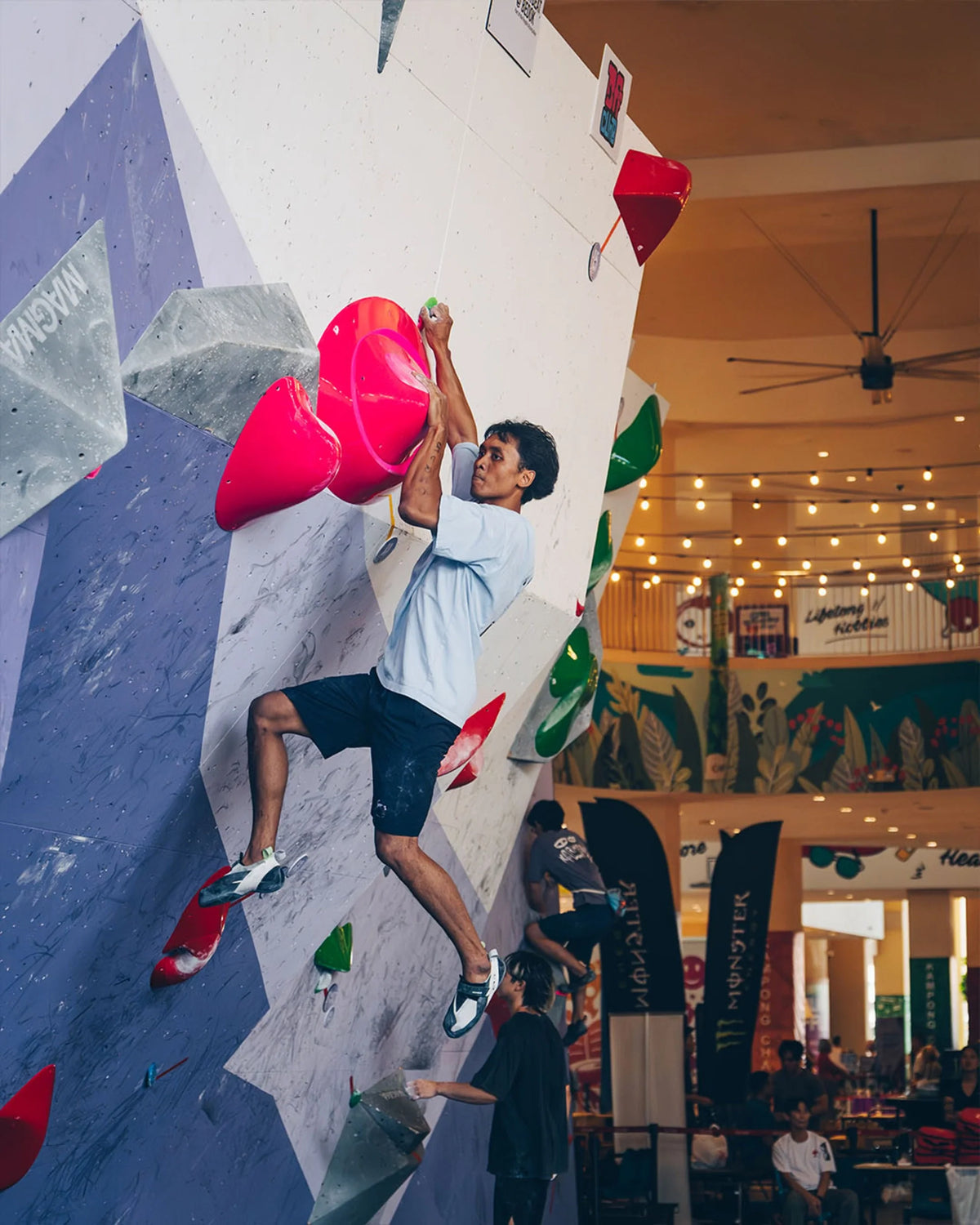
Notice where the wall angle changes. A problem that starts on a vertical section and moves into an overhang requires a shift in technique partway through — more reliance on body tension and less on simply standing on your feet. Spotting these transitions before you climb helps you anticipate where the problem gets harder.
Identifying the Crux
The crux is the hardest single move or sequence in a problem — the point most likely to cause a fall. Experienced climbers often identify the likely crux from the ground by looking for the largest gaps between holds, the worst hold quality (smallest, most sloped, or most awkwardly angled), or the most significant body position change required.
Identifying the crux in advance lets you climb the easier sections efficiently — without wasting energy — so you arrive at the hard part with as much strength as possible. Climbers who don't read ahead often burn unnecessary energy on the easy opening moves and arrive at the crux already fatigued.
If you can't identify an obvious crux from the ground, that's fine — not every problem has one obvious hardest point, and some only reveal their difficulty once you're actually on the wall and feeling the holds. Reading is a starting hypothesis, not a guarantee.
Watching Other Climbers

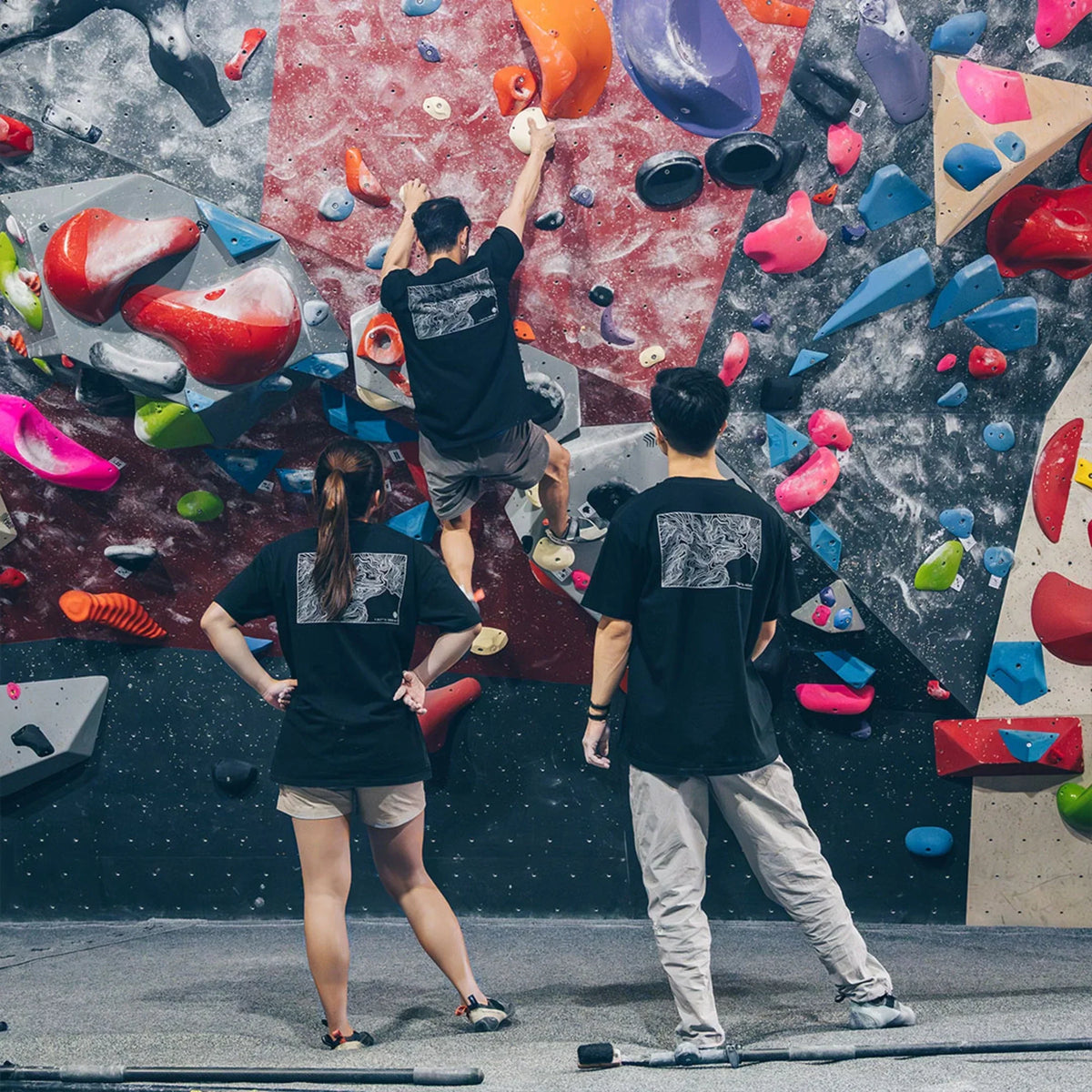
One of the fastest ways to improve your reading skills as a beginner is watching other climbers attempt the same problem before you try it. Notice where they place their feet, how they orient their hips, and where they pause or struggle. This gives you real information to supplement your own read, rather than relying purely on guesswork from the ground.
Be mindful of the etiquette here — watching is fine, but avoid hovering directly in someone's space or making them feel scrutinized. A bit of distance while observing is normal gym behaviour and nobody will mind.
If multiple climbers are taking different approaches to the same problem, pay attention to which approaches seem to work and which don't. Different body sizes and strengths sometimes call for genuinely different sequences on the same problem — what works for a taller climber may not work for you, and vice versa. Reading isn't just about the holds; it's about matching a sequence to your own body.
Adjusting Your Read Mid-Climb
Even a good read from the ground often needs adjustment once you're actually on the wall. Holds feel different under load than they look from below — a hold that looked like a comfortable grip might feel sharper or more sloped once you're pulling on it. This is normal, and the skill of climbing well includes the ability to adapt your plan in real time rather than rigidly forcing your ground-level read.
If a move isn't working the way you expected, it's worth pausing — if you're in a stable position — to reassess rather than forcing a sequence that clearly isn't working. Sometimes the better solution is a completely different body position than the one you planned from the ground.
Building This Skill Over Time
Reading ability develops mostly through volume — the more problems you read and then climb, the better you get at predicting what will actually work. Beginners often find their early reads are wrong more often than right, which is completely normal. The value isn't in being correct immediately; it's in building the habit of looking before climbing, which compounds into genuine skill over months of practice.
A useful exercise for building this skill deliberately: before every attempt, spend ten to fifteen seconds at the base of the wall identifying the start holds, tracing a rough path with your eyes, and guessing where the crux might be. Do this even on easy problems where you don't strictly need to. The habit transfers directly to harder problems where reading becomes essential rather than optional.
Key Takeaways
- Reading a problem means forming a plan — holds, sequence, body position — before you start climbing
- Identify start and finish holds first, then look at foothold placement, not just handholds
- Look for body position changes — hip turns, wall angle transitions — that the holds suggest
- Try to spot the crux in advance so you can conserve energy on easier sections
- Watch other climbers attempt the same problem for real information beyond your own guess
- Be willing to adjust your read once you're actually on the wall — holds feel different under load
- Build the habit on every problem, easy or hard — reading skill compounds with practice

Share:
Bouldering Etiquette: Unwritten Rules Every Climber Should Know
The Complete Beginner's Guide to Bouldering