



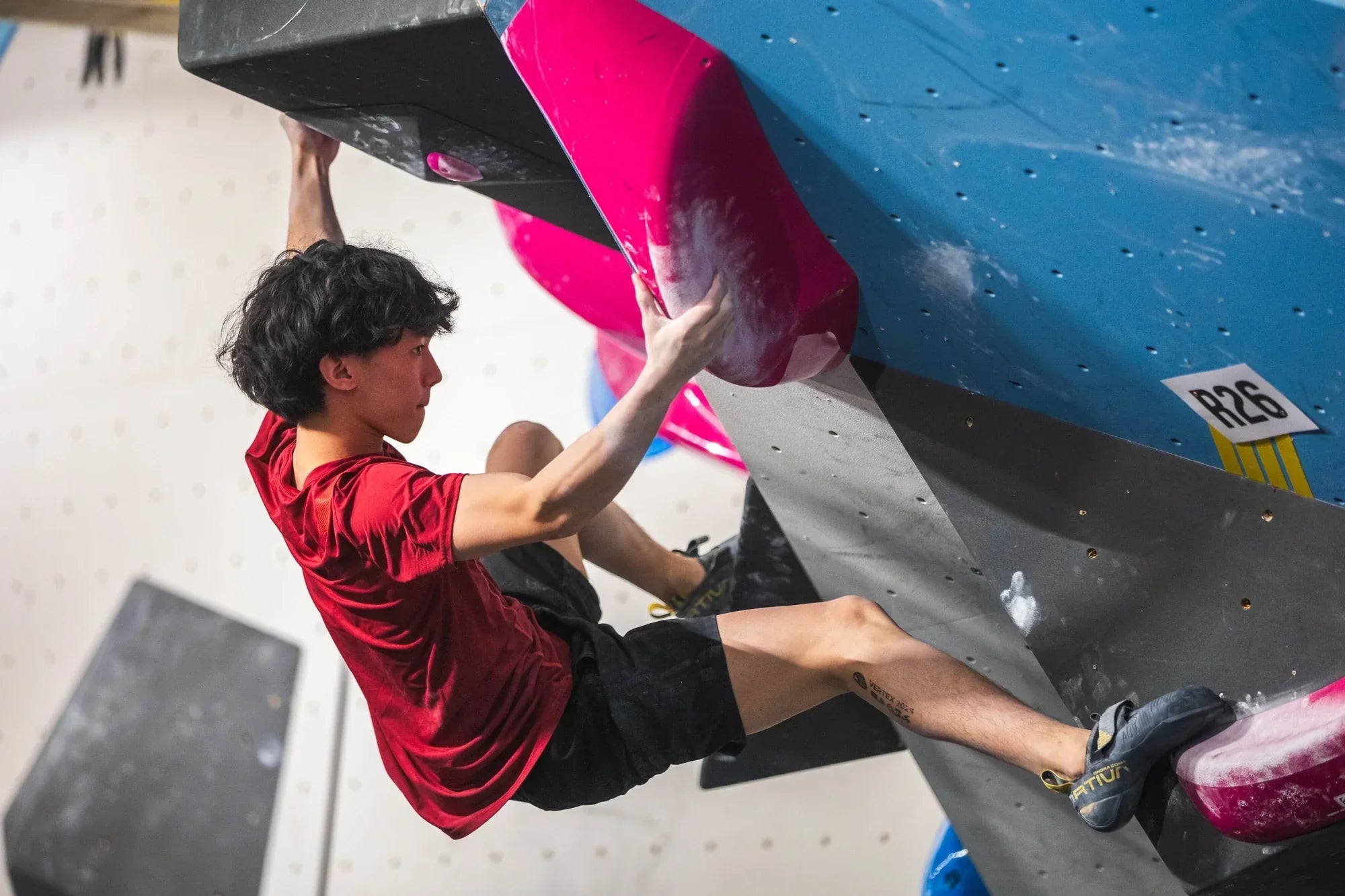
Bouldering is one of the most accessible ways to start climbing. No ropes, no harness, no partner required — just a pair of shoes, a chalk bag, and a wall covered in problems to solve. It's why most people in Singapore encounter climbing through bouldering first, and why dedicated bouldering gyms have become one of the fastest-growing fitness spaces in the country.
This guide covers everything a beginner needs to know: what bouldering actually is, what to expect from your first session, how grades work, what gear to buy and when, how to fall safely, how to behave in a gym, and how to start reading problems like an experienced climber. Each section links to a deeper article if you want to go further on any topic.
What Is Bouldering?

Bouldering involves climbing short routes — called problems — on walls typically between three and five metres high. Thick crash pads cover the floor to absorb falls. Problems are colour or symbol coded by difficulty, and the goal is to complete each one from the marked start holds to the finish hold using only the designated holds.
Unlike sport climbing, bouldering needs no partner, rope, or harness. The barrier to entry is low — rent shoes at the gym, pay a day pass, and you can start immediately. Sessions are self-directed, with no set structure; most people spend two to three hours working through problems at their level and resting between attempts.
Bouldering is also how most climbers develop technique fastest. Because problems are short, you get many more attempts per session than in any roped discipline, and technique built on easy problems transfers directly to harder ones. For a full breakdown of how bouldering differs from other types of climbing, see what is bouldering and how it differs from other climbing.
Your First Session
Most gyms don't require booking for general sessions. Wear close-fitting clothes you can move freely in, trim your nails, and bring a water bottle. Everything else — shoes, chalk — can be rented or bought at the gym.
At the front desk you'll sign a waiver and get a brief orientation covering the gym's grading system and basic safety. Ask staff to explain the difficulty scale — every gym in Singapore uses its own colour or symbol system, and understanding it from the start saves confusion.
In your first session: start on the easiest problems, expect forearm fatigue early, and focus on placing your feet deliberately rather than relying on arm strength. Chalk up when hands feel damp, not as a habit before every attempt. Rest when your grip fails rather than pushing through. For a full rundown of what to expect, see what to expect at your first bouldering session.
How Grades Work

Bouldering grades are not universal, especially in Singapore. International systems like the V-scale and Fontainebleau scale exist, but most local gyms use their own colour or number-based systems that don't map directly to each other. The same colour can mean very different difficulty levels at different gyms.
As a beginner, use grades as direction rather than as a score. The easiest grade tells you where to start; the next grade up tells you where the next challenge is. Movement quality matters far more than grade level in the early months — rushing to harder problems before fundamentals are solid is one of the most common mistakes beginners make. For a full explanation of how grading works, see bouldering grades explained.
What Gear You Need
Bouldering has a minimal gear requirement. For your first few sessions, rental shoes and borrowed chalk are enough. Once you're climbing regularly, here's what to own:
Climbing shoes are the highest-impact purchase. A well-fitted shoe makes footwork precise and gives you feedback about hold position. For beginners, a flat or mildly downturned shoe in a comfortable fit is better than an aggressive downturned shoe designed for steep overhangs.
Chalk manages moisture and improves friction — essential in Singapore's humidity. A small bag of powder chalk is the right starting point. As session frequency increases, liquid chalk becomes useful as a base layer. Thunder silica liquid chalk is designed for sustained humidity and bonds directly to the skin rather than sitting on top of sweat. Kumo powder chalk works well for top-ups between attempts.
A chalk bag holds your powder during a session. A waist bag with a stiff rim and secure closure is the standard starting point.
A skin file becomes relevant after your first month of regular climbing. The Razure skin file is compact enough to keep in your chalk bag and fine enough for post-session callus maintenance without over-removing skin. For a full gear breakdown including what not to buy yet, see what gear do you need to start bouldering.
How to Fall Safely
Falling is a normal part of bouldering — it happens in every session at every level. The crash pads are designed to absorb impact, but technique matters for landing safely.
The most important habit: don't reach back with your hands when you fall. The natural reflex is to put hands out to catch yourself, but on a crash pad this concentrates force through a single wrist rather than distributing it. Keep arms in or crossed over your chest, aim to land on both feet simultaneously with knees bent, and roll onto your back for significant falls.
Before every problem, check the landing zone — look for people in your fall zone, pad edges, and holds or volumes on the floor that could catch a landing badly. This takes five seconds and eliminates most preventable injuries. For a full breakdown of falling technique across different wall types, see how to fall safely when bouldering.
Gym Etiquette

Bouldering gyms run on unwritten social norms that nobody explains to beginners. The key ones:
Wait for a climber to finish their attempt before starting the same problem. Never start below someone who's already on the wall. Don't give unsolicited advice — called beta — while someone is mid-attempt; offer after they've finished, or when asked. Chalk deliberately and brush holds when available — excess chalk builds up on holds and degrades grip for everyone. Use headphones rather than speakers for music, and be mindful of filming setups blocking shared space.
Most awkwardness in a bouldering gym comes from not knowing these norms rather than from anything the other climbers do — once you know them, the gym environment is genuinely welcoming. For a full etiquette guide, see bouldering etiquette: unwritten rules every climber should know.
How to Read a Problem
Reading a problem means forming a plan — holds, sequence, body position — before you start climbing. Experienced climbers do this as a matter of habit on every problem; beginners who skip it waste attempts and energy figuring things out under load that they could have worked out from the ground.
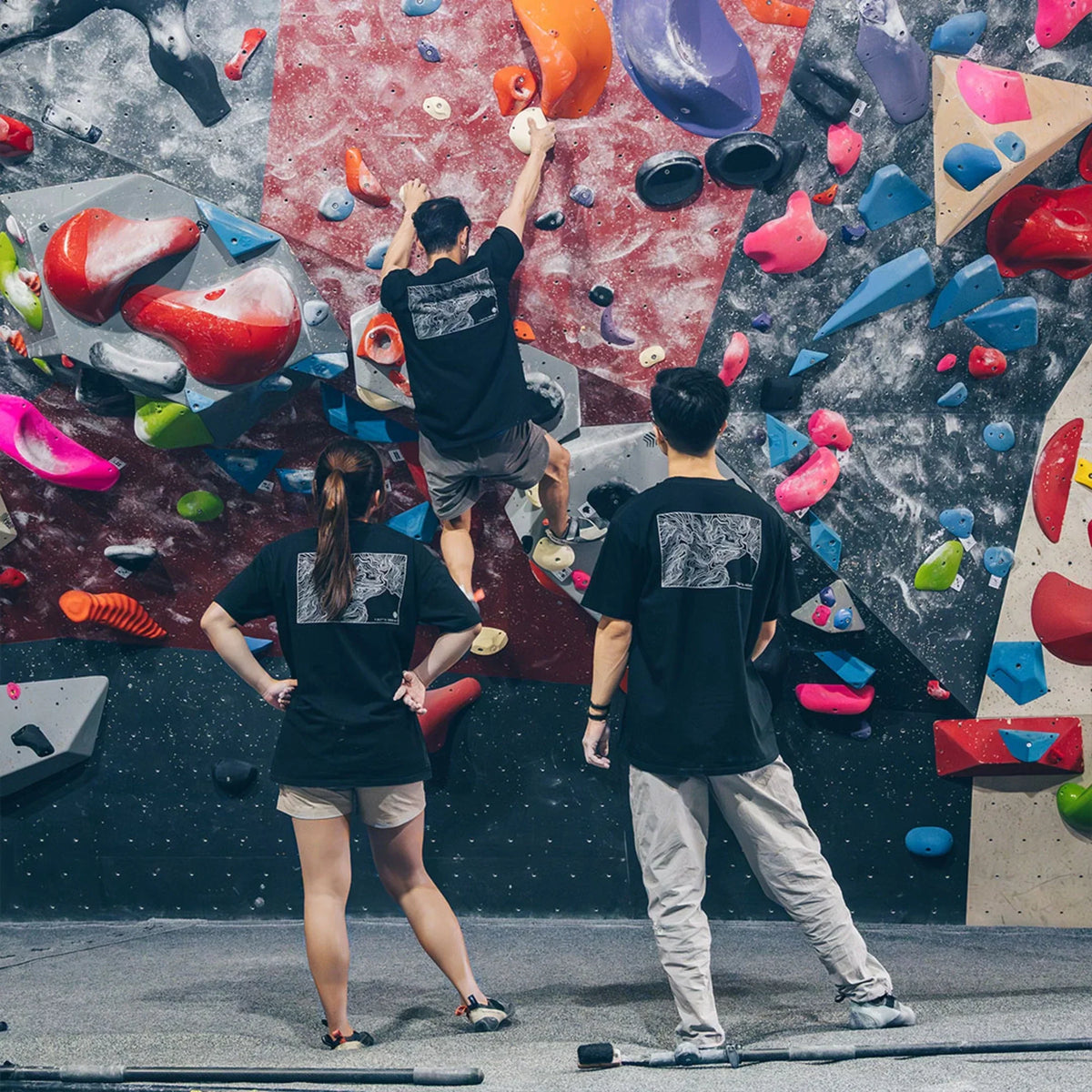
Start by identifying the start and finish holds, then trace a rough path between them. Pay attention to footholds, not just handholds — foot placement often determines whether a hand move is possible. Look for the crux, the hardest section of the problem, so you can conserve energy on the easier moves before it. Watch other climbers attempt the same problem for real information beyond your own guess.
Reading skill develops with volume — the more problems you read and then climb, the better your predictions become. Building the habit on easy problems transfers directly to harder ones where it becomes essential. For a full breakdown of how to read problems effectively, see how to read a bouldering problem.
Managing Your Skin
Skin care is the part of bouldering most beginners don't think about until it forces itself on them. The friction from holds wears skin faster than expected — especially in Singapore's humidity, where skin is softer and more vulnerable to tearing than in dry conditions.
The basics: file rough callus edges after every session before they snag and tear, wash hands after climbing to remove chalk residue, and moisturise before sleep to offset the drying effect of chalk and alcohol from liquid chalk. These three habits prevent most of the skin problems that sideline beginner climbers unnecessarily. For a full guide, see the complete guide to climbing skin care in humid conditions.
Getting Better: What to Focus On in the First Few Months
Progress in bouldering's early months comes mostly from technique, not strength. The specific habits worth building deliberately:
Trust your feet. Most beginners over-rely on arm strength because it's familiar. Climbing efficiently means pushing with your legs and standing on your feet rather than pulling with your arms. Easy problems are designed to teach this — use them for that purpose rather than just ticking them off.
Climb slowly. Rushing through problems prevents you from feeling what's working and what isn't. Slow, deliberate movement on easy problems builds better body awareness than fast, sloppy movement on hard ones.
Rest properly. Tendons adapt more slowly than muscles. The load from gripping is significant even on easy problems, and going back too soon before adaptation begins is how minor finger soreness becomes a longer injury. At least one full rest day between sessions in your first month is not optional.
Read before you climb. Make it a habit on every problem, easy or hard. It compounds into genuine skill faster than almost anything else you can do as a beginner.
Key Takeaways
- Bouldering is rope-free climbing on short walls — the lowest gear barrier of any climbing discipline
- Grades vary by gym in Singapore — ask staff to explain the system when you arrive
- Buy shoes first, then chalk and a chalk bag; add a skin file after your first month
- Don't reach back when you fall — arms in, two feet, bent knees
- Learn the unwritten etiquette — most gym awkwardness comes from not knowing it, not from anything you're doing wrong
- Read every problem before climbing it — the habit builds fast and pays off on every problem you'll ever climb
- Rest properly — tendons adapt slowly, and patience in the first months produces faster long-term progress

Share:
How to Read a Bouldering Problem
How to Structure Your First Climbing Training Week