



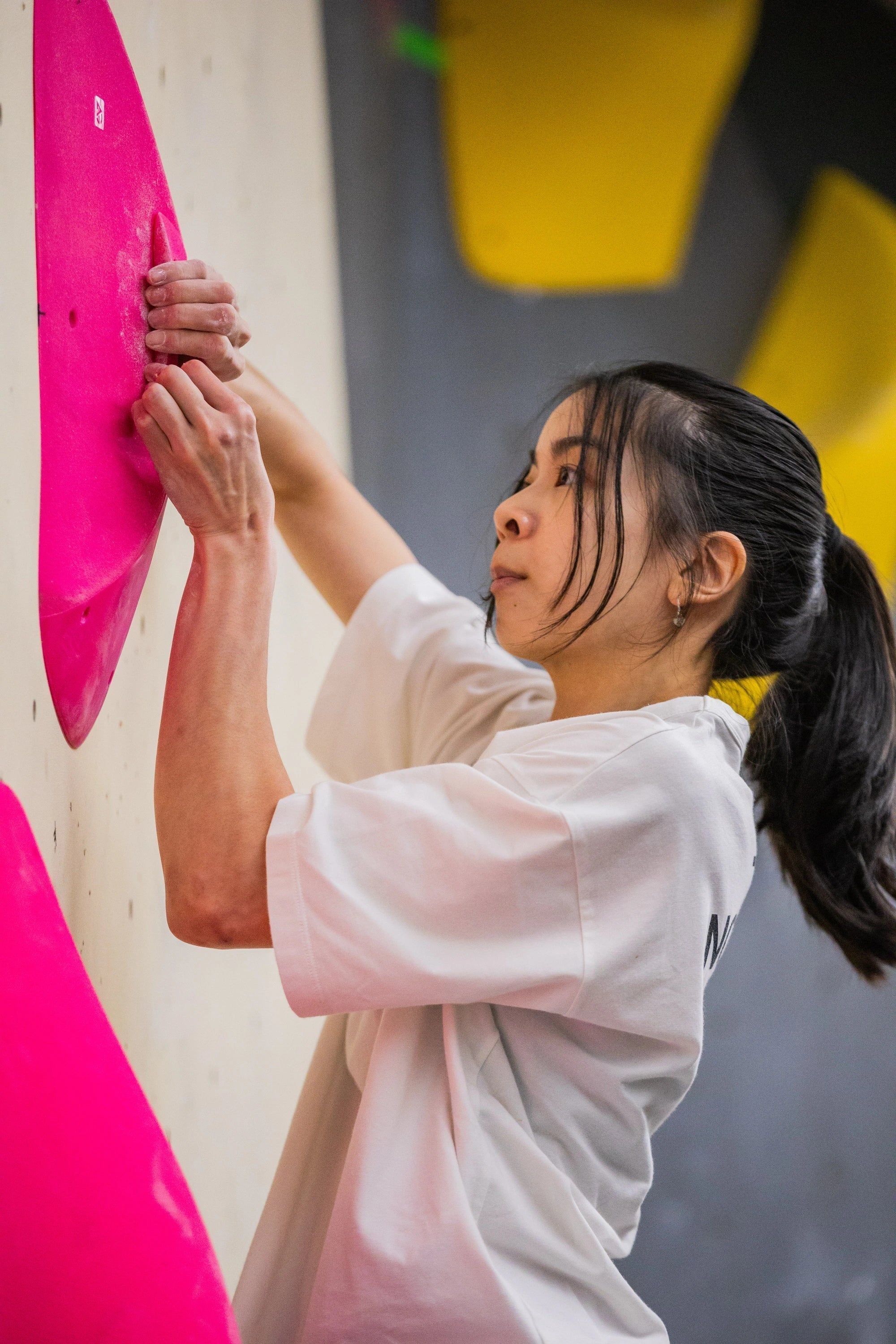
Bouldering is the most accessible form of climbing. No ropes, no harness, no partner required — just you, a wall, and a problem to solve. It's why most people in Singapore encounter climbing through bouldering first, and why dedicated bouldering gyms have become one of the fastest-growing fitness spaces in the country.
But bouldering is one of several types of climbing, and understanding how it differs from the others helps you know what you're getting into, why it's suited to beginners, and where it might take you.
What Bouldering Actually Is

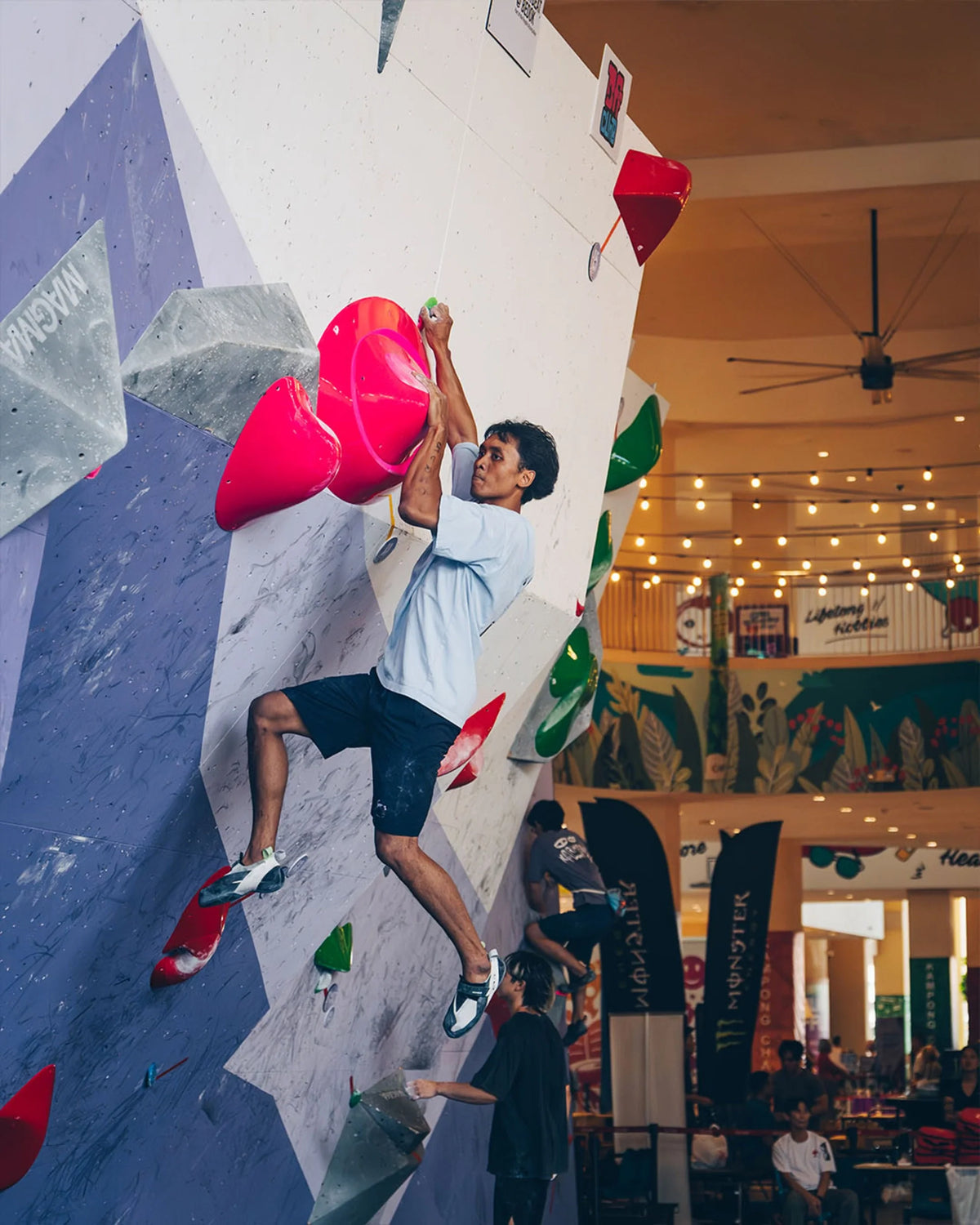
Bouldering involves climbing short routes — called problems — on walls typically between three and five metres high. Thick crash pads cover the floor to protect you when you fall, which happens frequently and is a normal part of the sport. The goal is to complete a problem from the starting holds to the finishing hold using only the holds designated for that route, usually marked by colour or tape.
Problems are set to be challenging in different ways — some require explosive power, some demand precise balance, some test flexibility or coordination. Each problem is a physical puzzle, which is why the sport uses the word "problem" rather than "route." Figuring out the sequence of moves that gets you to the top is as much a part of bouldering as the physical execution.
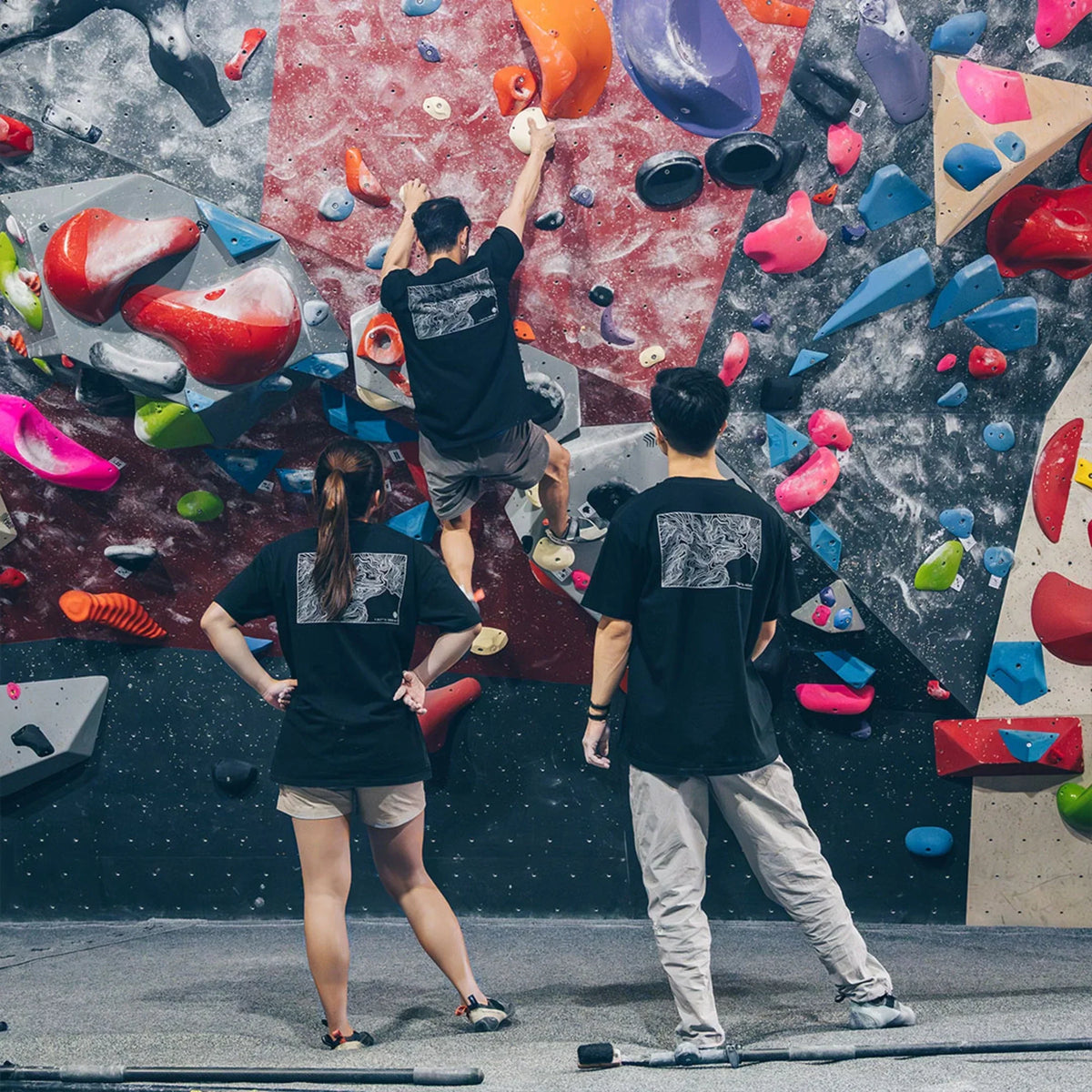
Sessions are self-directed. You move through the gym trying problems at your level, resting between attempts, and occasionally watching how other climbers approach the same problem for ideas. There's no set structure — most people stay two to three hours and work through whatever catches their attention.
How Bouldering Differs from Sport Climbing
Sport climbing — also called lead climbing or top rope climbing — uses ropes and a harness. Routes are much taller, typically ten to twenty metres, and climbers clip the rope into bolts on the wall as they ascend. A partner on the ground manages the rope and catches falls.
The key differences from bouldering:
- Height: sport climbing routes are significantly taller. The challenge includes managing fear of height and sustained endurance over a longer climb.
- Partner dependency: sport climbing requires a belayer — someone trained to manage the rope. Bouldering needs no partner.
- Equipment: sport climbing requires a harness, rope, belay device, and carabiners on top of shoes. Bouldering needs only shoes and chalk.
- Style of movement: bouldering problems are shorter and typically harder move-for-move. Sport climbing routes involve more sustained, continuous movement at a lower intensity per move.
Many climbers do both. Bouldering builds raw strength and technique; sport climbing builds endurance and mental composure. They complement each other well, and some climbing gyms in Singapore even offer both.
How Bouldering Differs from Traditional Climbing
Traditional climbing — trad climbing — takes place outdoors on natural rock. Climbers place their own removable protection into cracks in the rock as they ascend, rather than clipping pre-installed bolts. It requires a much higher skill level, significant gear investment, and is rarely the first type of climbing anyone encounters.
For most climbers in Singapore, trad climbing is a distant progression if it's a goal at all. The local climbing scene is almost entirely gym-based bouldering and sport climbing, with some outdoor sport climbing at Dairy Farm and occasional trips to Krabi or Yangshuo for those who progress further.
Why Bouldering Is the Natural Starting Point

Bouldering is where most people start for practical reasons. The barrier to entry is low — rent shoes at the gym, pay the day pass, and you can climb. No technical knowledge is required on day one beyond basic safety awareness, and the gym environment at most Singapore bouldering gyms is welcoming to complete beginners.
The learning curve is also fast. Because problems are short and you can attempt them repeatedly with minimal setup, you get many more attempts per session than in sport climbing. Technique improves quickly, progress is visible within the first few sessions, and the social environment — where people naturally share beta and encourage each other — accelerates learning in a way that solo training rarely does.
Chalk is part of bouldering from the beginning. Most gyms in Singapore allow chalk use, and most beginners pick up a chalk bag and some powder chalk within their first few sessions once they understand why grip matters. For a full breakdown of how chalk works and which type suits different hands, see the complete guide to climbing chalk.
What to Expect from a Bouldering Gym in Singapore
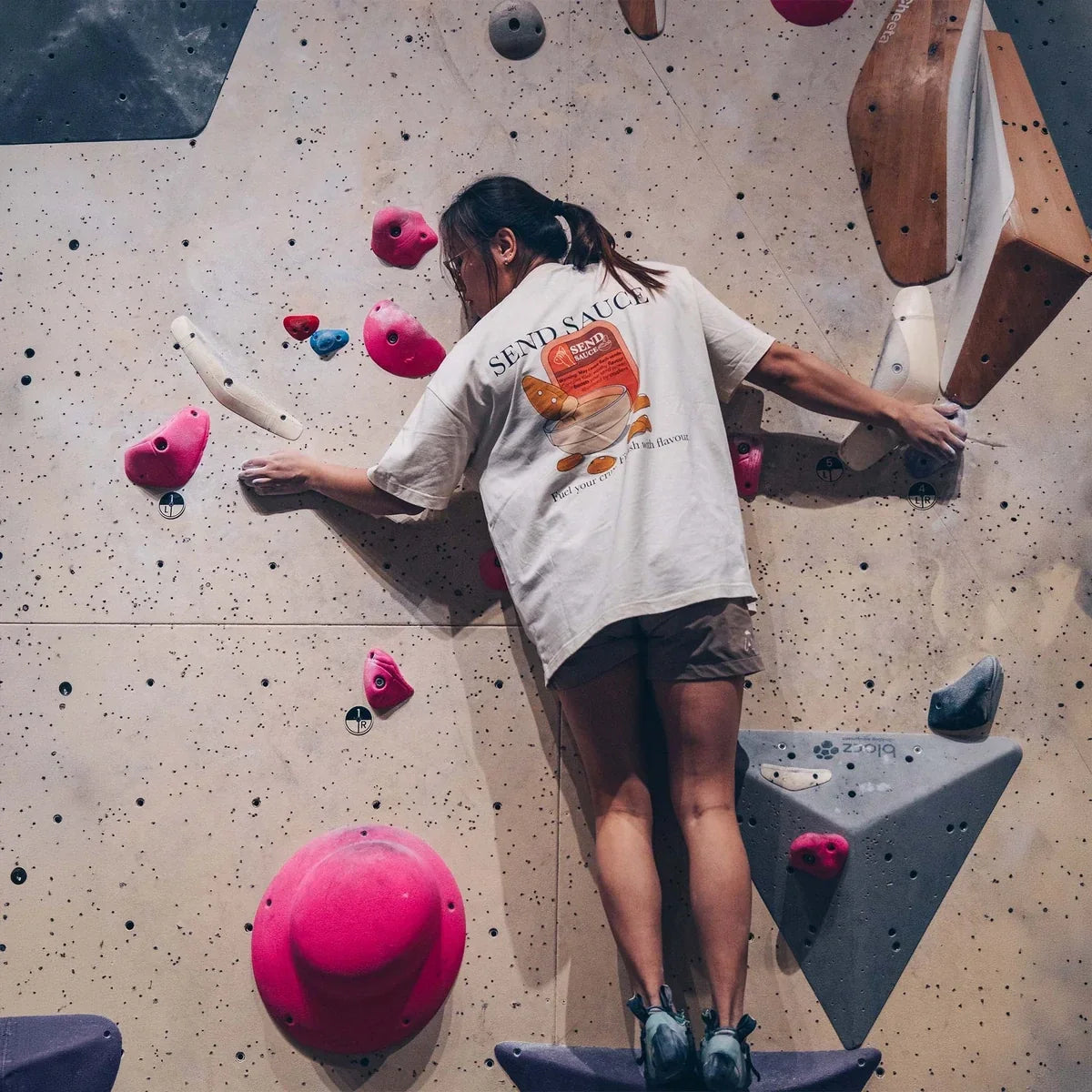
Most bouldering gyms in Singapore follow a similar format. The main floor is covered in crash pads. Walls are set at various angles — vertical, slightly overhung, steep overhang, and sometimes a roof section. Problems are reset periodically, typically on a rolling schedule where some problems are replaced each week to keep the gym fresh.
Difficulty is indicated by colour, symbol, or a combination — each gym has its own system, and the same colour can mean very different things at different gyms. Staff at the front desk can usually explain the system when you arrive. Don't assume that difficulty labels transfer between gyms — a red problem at one gym might be significantly harder or easier than a red problem at another.
Most gyms offer rental shoes, which is the recommended starting point for first-timers. Rental shoes are adequate for getting a feel for the sport. Once you're going regularly — two or three times a week — it's worth investing in your own pair for hygiene reasons and because a well-fitted shoe makes a noticeable difference to performance on technical footwork.
Is Bouldering Hard?
Yes and no. The easiest problems at most gyms are genuinely accessible to people with no climbing background — they're designed to be completed in a few attempts. The hardest problems in the same gym are among the most physically demanding things most athletes will ever attempt. The range is vast, which is part of what makes bouldering work as a long-term sport — there's always a next challenge regardless of level.
For beginners, the main challenge isn't strength. It's learning to trust your feet, understand body positioning, and read movement patterns that aren't intuitive until you've seen them a few times. Strength catches up quickly once technique improves; technique is what unlocks progress in the early months.
Key Takeaways
- Bouldering is rope-free climbing on short walls — typically 3–5 metres — with crash pads for protection
- Problems are colour or symbol-coded by difficulty; systems vary by gym in Singapore
- Unlike sport climbing, bouldering needs no partner, harness, or rope — minimal equipment barrier
- The learning curve is fast due to high attempt volume per session
- Most Singapore gyms offer rental shoes — start there, invest in your own once you're climbing regularly
- Beginner problems are genuinely accessible; the sport scales to any level from there

Share:
The Complete Guide to Climbing Chalk — Types, Uses, and How to Choose
What to Expect at Your First Bouldering Session