



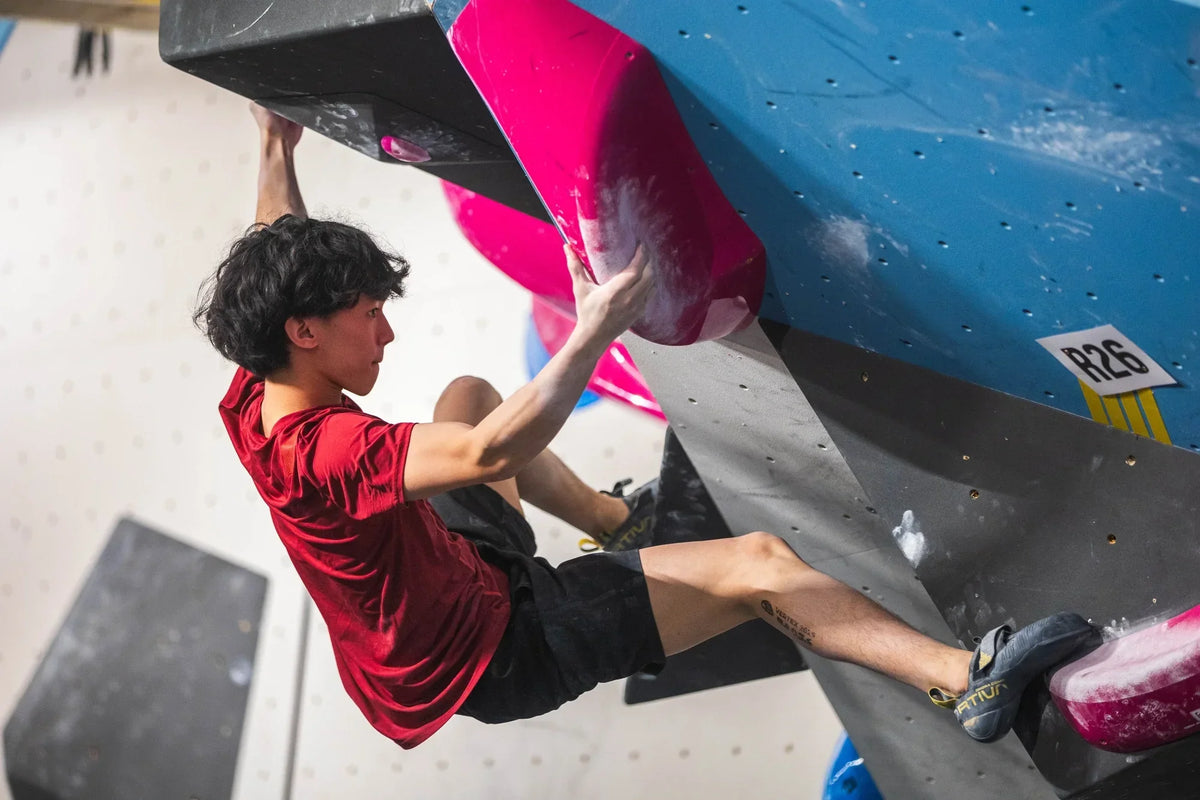
Climbing is a pulling sport. Every move that isn't a push off a foothold involves pulling — fingers gripping, forearms flexing, lats and biceps drawing your body toward the wall. Over months of consistent climbing, this builds a significant strength imbalance: the pulling muscles get stronger and stronger while the opposing push muscles barely get used at all.
This article explains what antagonist training is, why it matters more than most beginners realise, and how to add it without needing a gym membership or complicated equipment.
What Antagonist Muscles Are
Antagonist muscles are the muscles that work in opposition to a primary movement. In climbing, the primary movers are the pulling muscles — forearm flexors, biceps, lats, and the muscles around the shoulder blades that draw the arm inward and backward. The antagonists are the corresponding push muscles: forearm extensors, triceps, chest, and the muscles that rotate the shoulder outward and stabilise it in the opposite direction climbing constantly loads it.
Every pulling movement climbing trains has a corresponding pushing movement that goes almost entirely untrained by the sport itself. Climbers who only climb, without any supplementary work, develop increasingly lopsided strength between these two systems the longer they climb.
Why This Imbalance Matters
Muscle imbalance around a joint changes how that joint is stabilised. Shoulders are particularly vulnerable in climbing because the sport asks a huge amount of the pulling muscles around the shoulder — lats, rear deltoids, rotator cuff muscles that internally rotate the arm — while doing almost nothing for the muscles that stabilise the shoulder in the opposite direction. Over time, this imbalance is a significant contributor to the shoulder impingement and rotator cuff issues that are common among climbers who train for months or years without any antagonist work.
Elbows face a similar issue, though the mechanism is slightly different. The forearm flexors used in every grip get powerful; the forearm extensors used to open the hand and support wrist extension stay comparatively weak. This imbalance is one of several contributing factors in climber's elbow — a form of tendinopathy at the elbow that's common enough in the sport to have its own informal name.
None of this means climbing is inherently dangerous or that injury is inevitable. It means that a sport this asymmetric in its demands benefits from a small amount of counterbalancing work, the same way runners benefit from some strength training despite running itself being the primary activity.
The Core Antagonist Exercises for Climbers

Push-ups are the simplest and most accessible antagonist exercise available. They train the chest, triceps, and front shoulder — all underused in the pulling-dominant pattern of climbing. Standard push-ups are sufficient for most beginners; no special equipment or gym access required.
Overhead press or shoulder press movements build strength in the deltoids and upper back in a pattern climbing doesn't provide. Dumbbells, resistance bands, or even household objects with enough weight work for a basic version of this at home.
External rotation exercises — using a light resistance band to rotate the forearm outward against resistance, elbow tucked at the side — directly target the rotator cuff muscles that stabilise the shoulder in the direction opposite to climbing's demands. This is one of the highest-value exercises specifically for climbers, given how much shoulder issues show up in the sport over time.
Wrist extensions — using a light dumbbell or resistance band to extend the wrist against resistance, working the forearm extensors — directly counterbalances the flexor-dominant grip training climbing provides. This is a small, quick exercise that specifically targets the elbow imbalance mentioned earlier.
Reverse flys or band pull-aparts — pulling a resistance band apart at chest height, engaging the muscles between the shoulder blades — help correct the rounded shoulder posture that develops from months of pulling-dominant training and reinforces upper back strength.
How Often and How Much
Antagonist training doesn't need to be a major time investment. Two short sessions a week, ten to fifteen minutes each, is enough to meaningfully counterbalance climbing's imbalances for a beginner. This can be done on rest days from climbing, or as a short warm-down after a climbing session if you have the energy for it.
Keep the intensity moderate. This is supplementary injury-prevention work, not a separate strength training program competing for your recovery capacity alongside climbing. Light to moderate resistance with good form, for two to three sets of each exercise, is sufficient. There's no benefit to pushing these to failure or treating them as a serious hypertrophy program — the goal is balance, not maximal strength in the antagonist muscles themselves.
When to Start Antagonist Training
Unlike fingerboard training, which should wait until you have a year or more of consistent climbing under you, antagonist training is appropriate to start from your first few months of climbing. It doesn't add load to the fingers or tendons that need the most careful pacing, and the injury-prevention benefit compounds the earlier you start.
If you're just starting out and feel overwhelmed by adding anything on top of learning to climb, it's reasonable to wait a month or two until climbing itself feels more comfortable before adding structured antagonist work. But don't wait a year — the imbalance starts developing as soon as you start climbing regularly, and earlier intervention is more effective than trying to correct a larger imbalance later.
Signs the Imbalance Is Becoming a Problem
Persistent shoulder discomfort, particularly at the front or top of the shoulder during overhead reaching or during climbing moves that load the shoulder in extension, can be an early sign of the impingement patterns associated with this imbalance. Elbow pain on the outer or inner side of the joint, particularly with gripping or wrist movement, is a similar early signal related to the flexor-extensor imbalance.
These signs don't necessarily mean you need to stop climbing, but they're worth taking seriously rather than ignoring. Adding or increasing antagonist work, along with proper warm-ups before climbing, are reasonable first responses. Persistent or worsening pain that doesn't improve with these adjustments warrants seeing a physiotherapist familiar with climbing injuries rather than continuing to push through it.
Key Takeaways
- Climbing is a pulling-dominant sport that builds significant strength imbalance against the corresponding push muscles
- This imbalance contributes to common climbing injuries, particularly shoulder impingement and elbow tendinopathy
- Push-ups, overhead presses, external rotations, wrist extensions, and band pull-aparts cover the main antagonist patterns
- Two short sessions a week at moderate intensity is enough — this is injury prevention, not a separate strength program
- Start antagonist training early, within your first few months of climbing — it doesn't add load to fingers or tendons
- Persistent shoulder or elbow discomfort is worth addressing with antagonist work and proper warm-ups, or a physiotherapist if it doesn't improve




Share:
Finger Strength Basics: What Beginners Should (and Shouldn't) Do
How to Warm Up Properly Before Climbing