



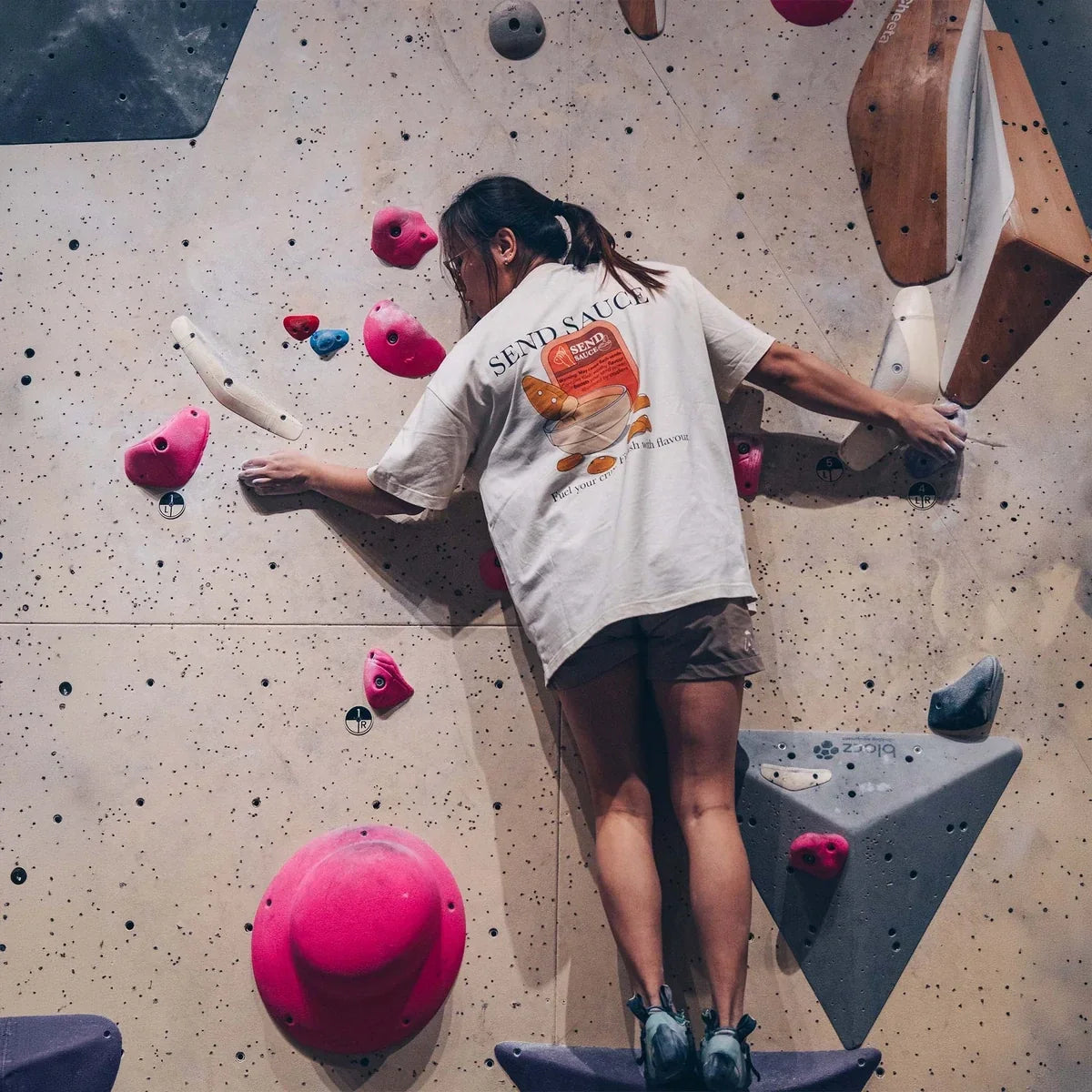
Most beginners approach climbing training with more enthusiasm than structure — showing up when motivated, climbing until tired, and hoping progress happens on its own. It often does, for a while. But the first year of climbing is also when most avoidable injuries happen, almost always because muscles adapt faster than tendons and connective tissue, and beginners trust how their body feels in the moment rather than how much time it actually needs to adapt.
This guide covers how to train as a beginner climber without accumulating injuries that will eventually force a much longer break than any of the rest days you're tempted to skip. Each section links to a deeper article if you want to go further on any specific topic.
Structuring Your Training Week

Two to three climbing sessions per week is the right range for most beginners in their first few months. This builds skill and strength steadily while leaving enough recovery time for connective tissue to adapt between sessions. Climbing more frequently than this as a complete beginner is where most overuse injuries begin — the load feels manageable session to session, but accumulates faster than recovery can keep up with.
Leave at least one full rest day between sessions. A well-structured session itself has phases too: a proper warm-up, skill and volume work on manageable problems, limit attempts once you're warmed up, and a cool-down with a skin check before you leave. For a full breakdown of how to structure a sustainable weekly schedule, see how to structure your first climbing training week.
Finger Strength: What to Do (and What to Avoid)
Finger strength comes from two adaptations that happen at very different speeds — muscles adapt within weeks, tendons and pulleys take far longer, often months. For most of your first year, climbing itself provides enough naturally varied finger loading to build real strength, without needing isolated finger training.
Fingerboards apply concentrated, repetitive load to a fixed edge size and position — exactly the kind of loading beginner tendons aren't ready for. Wait until you've been climbing consistently for at least a year before introducing structured fingerboard work, and even then, start conservatively. For the full explanation, see finger strength basics: what beginners should (and shouldn't) do.
Balancing Push and Pull: Antagonist Training
Climbing is a pulling-dominant sport. Every session builds the muscles that pull you toward the wall while leaving the opposing push muscles almost entirely untrained. Over months, this imbalance is a significant contributor to two of the most common climbing injuries: shoulder impingement and climber's elbow.
Push-ups, overhead presses, external rotation exercises, wrist extensions, and band pull-aparts cover the main antagonist patterns climbing neglects. Two short sessions a week, ten to fifteen minutes each, is enough — and unlike fingerboard training, it's safe to start from your first few months of climbing since it doesn't load fingers or tendons directly. For the full routine, see antagonist training: why climbers need to train push muscles too.
Warming Up Properly
Cold tendons are measurably more injury-prone than warmed-up ones, and climbing loads fingers almost immediately — even an easy problem stresses the pulley system in a way few other activities do. A proper warm-up has three phases: general mobility to raise body temperature, targeted joint mobility for shoulders and wrists, and progressive climbing through several problems of increasing difficulty before attempting anything near your limit.
Ten to fifteen minutes is enough. Skipping it to save session time is a false economy — an injury costs far more time than warming up ever would. For a full routine, see how to warm up properly before climbing.
Common Injuries and How to Prevent Them
A small handful of injuries account for most of what beginners experience in their first year: finger pulley strains from heavy crimping before tendons are ready, climber's elbow from repetitive gripping combined with muscle imbalance, shoulder impingement from the same imbalance pattern, and skin tears from under-maintained calluses — more frequent in Singapore's humidity than in drier climates.
Each has a fairly direct prevention strategy: favour open-hand grips over heavy crimping early on, do antagonist training consistently, warm up properly before every session, and maintain skin with regular filing and moisturising. Sharp pain that doesn't resolve within a few days, or any pain present during normal daily activities, warrants seeing a physiotherapist familiar with climbing injuries rather than pushing through it. For the full breakdown of each injury and its prevention, see recognising and preventing common beginner climbing injuries.
Rest and Recovery

Progress happens during recovery, not during the climbing session itself. Training creates small amounts of micro-damage in muscles and tendons; the adaptation that makes you stronger happens afterward, during rest. Skip or shorten recovery consistently, and micro-damage accumulates faster than it's repaired.
Tendons recover more slowly than muscles — feeling recovered muscularly doesn't mean your fingers' connective tissue has finished adapting. Sleep is one of the most underrated recovery levers available; consistently under-sleeping undermines recovery regardless of how well-spaced your sessions are. Persistent soreness, declining performance despite consistent effort, and sleep disruption are all signs you need more recovery, not more training. For the full picture, see rest and recovery: how much do climbers actually need.
Tracking Your Progress
Grades alone are a noisy, lagging indicator of progress, especially given how inconsistently gyms in Singapore grade their problems. Session consistency, problems completed by grade level, flash rate, and specific technique goals give a far more accurate and motivating picture of what's actually improving.
A simple post-session note — a few lines on what you climbed and how it felt — is enough tracking for most beginners; dedicated apps are optional. Periodic video of your own climbing reveals technique progress that's genuinely hard to notice in the moment. Compare progress over months rather than week to week, since the longer trend is far more reliable than any single session's feeling. For the full approach, see how to track your climbing progress as a beginner.
How Chalk and Skin Care Fit Into Training
Training habits and equipment habits are connected more than most beginners realise. Excess chalk use accelerates skin drying, and skin that's cracking or torn changes how you climb — often leading to compensatory movement patterns that increase injury risk elsewhere. Thunder silica liquid chalk and Kumo powder chalk both matter more in Singapore's humidity than in drier climates, and proper post-session skin care — filing rough callus edges, washing chalk residue, and moisturising before sleep — is genuinely part of a sustainable training routine, not a separate concern. The Razure skin file is worth adding to your kit once you're climbing regularly.
For a complete breakdown of chalk and skin habits specifically, see the complete guide to climbing chalk and the complete guide to climbing skin care in humid conditions.
A Realistic First-Year Training Approach
Putting all of this together, a sensible approach for a beginner's first year looks something like this: climb two to three times a week with a rest day between sessions, warm up properly every time, focus on technique and volume over chasing grades, add antagonist training from month one, hold off on fingerboard training until you've been climbing consistently for a year, and track progress through consistency and technique goals rather than grades alone.
None of this requires rigid discipline or turning climbing into a chore. It requires paying attention to a handful of habits that compound significantly over months — the beginners who progress fastest and most sustainably aren't usually the ones who climb the most; they're the ones who respect the pace their body actually needs to adapt.
Key Takeaways
- Two to three sessions weekly, with at least one rest day between each, is the right baseline for most beginners
- Climbing itself builds sufficient finger strength for the first six to twelve months — hold off on fingerboards
- Antagonist training counterbalances climbing's pulling-dominant demands and should start early, unlike fingerboard work
- A proper ten to fifteen minute warm-up meaningfully reduces injury risk for a small time cost
- Most beginner injuries — pulley strains, climber's elbow, shoulder impingement — have clear, preventable causes
- Recovery, not training volume, is where adaptation actually happens — respect it as much as the climbing itself
- Track progress through consistency and technique, not grades alone, especially given how inconsistently Singapore gyms grade problems


Share:
How to Track Your Climbing Progress as a Beginner
What to Eat Before a Climbing Session