



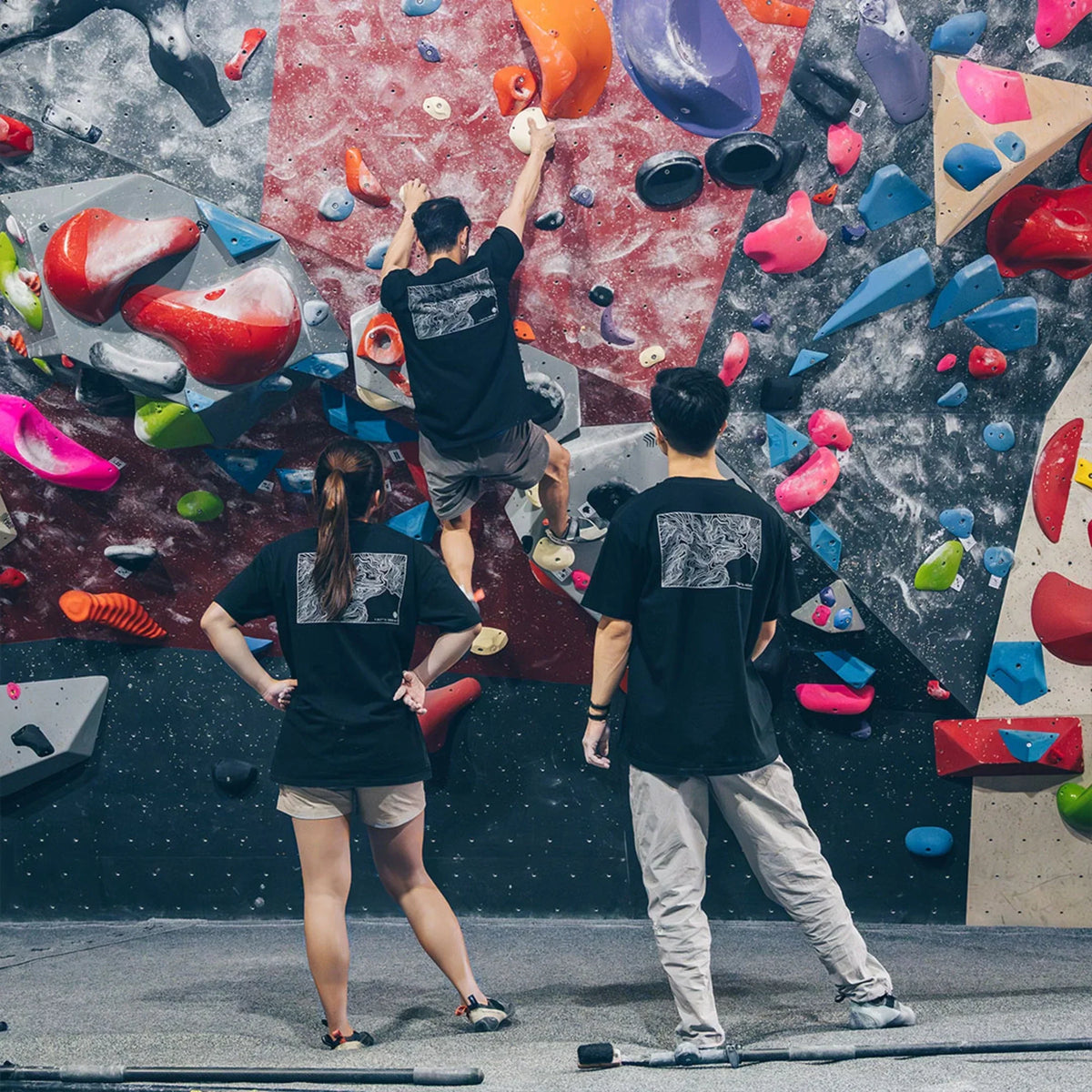
Progress in bouldering doesn't move in a straight line, and it's easy to feel stuck even when real improvement is happening. Grades don't tell the full story, sessions feel inconsistent week to week, and without some way of tracking what's actually changing, it's common for beginners to either lose motivation or misjudge how they're actually doing.
This article covers what's worth tracking as a beginner, how to do it without turning climbing into a spreadsheet exercise, and how to read your own progress accurately over time.
Why Grades Alone Don't Capture Progress
Grades feel like the obvious progress metric, but they're a lagging and noisy indicator, especially in the first year. As covered in more depth elsewhere in this cluster, grading systems vary between gyms in Singapore and even within a single gym they can feel inconsistent from one problem to the next. A climber can genuinely improve in technique, strength, and movement quality for weeks without that improvement showing up as a new grade completed, simply because of how problems happen to be set at the time.
Relying purely on grade progression as your measure of improvement sets up beginners for frustration during normal plateaus that aren't actually plateaus — periods where real underlying progress isn't yet reflected in completed problems. Tracking a broader set of signals gives a more accurate and more motivating picture of what's actually happening.
What's Actually Worth Tracking

Session consistency. How many sessions you're climbing per week or month, tracked over time, is one of the simplest and most predictive indicators of long-term progress. Consistency compounds; sporadic climbing doesn't, regardless of how hard any individual session is.
Problems completed by difficulty, not just your hardest send. Rather than only noting your hardest completed problem, track how many problems you're completing at each grade level in a session. Early progress often shows up as completing easier grades more efficiently and with less fatigue, well before it shows up as a new personal best grade.
Flash rate. A flash is completing a problem on your first attempt. Tracking roughly how often you're flashing problems at a given grade — even informally — is a genuinely useful signal of technical competence at that level, separate from raw strength or persistence.
Specific technique goals. Rather than only tracking outcomes, note specific movement skills you're working on — using your feet more deliberately, trying flagging on off-balance moves, working on quiet, controlled landings. Progress on these specific, controllable goals is often more encouraging and more actionable than grade-based tracking alone.
Recovery and injury signals. Noting how your fingers, elbows, and shoulders feel after sessions — not just performance — helps you catch overuse patterns early and correlate training load with how your body is actually responding. This connects directly to recovery tracking covered elsewhere in this cluster.
Simple Ways to Track Without Overcomplicating It
You don't need a dedicated app or elaborate spreadsheet to track climbing progress usefully, though both are fine if you enjoy that level of detail. A simple approach that works for most beginners: a short note after each session — a few lines in your phone's notes app — covering what you climbed, how it felt, and anything notable about technique or soreness.
Over weeks and months, these short notes become a genuinely useful record. You'll be able to look back and see patterns that aren't obvious session to session: gradual grade progression, recurring soreness after certain types of sessions, or specific technique breakthroughs that happened around a particular time.
Several dedicated climbing apps exist for more structured tracking, letting you log specific problems, grades, and attempts in more detail. These are worth exploring if you find yourself wanting more structure, but they're not necessary for meaningful tracking — the habit of reflecting after sessions matters more than the specific tool used to do it.
Photos and Video
Recording yourself climbing periodically — even just occasionally, not every session — provides a different kind of progress record than notes or grades. Watching footage of your climbing from a few months earlier against current footage often reveals technique improvements that are hard to notice in the moment but obvious in retrospect: better foot precision, more controlled movement, less wasted energy.
This is particularly useful for beginners because movement quality is genuinely difficult to self-assess in real time. A short clip every month or two, even just from a phone propped against a bag, gives you an objective record to compare against later.
Setting Goals That Actually Motivate
Goals tied purely to grade numbers can become demotivating given how inconsistent grading feels between gyms and even within a single gym over time. More sustainable goals for beginners tend to be process-oriented: climbing consistently three times a week for a month, focusing on quiet footwork for a training block, or completing a certain number of problems at a level you're currently working rather than only chasing the hardest single send.
Outcome goals still have their place — completing a specific problem, reaching a certain grade — but pairing them with process goals gives you something to feel good about even during weeks where the outcome goal doesn't move forward. This is particularly important in the first year, when technique gains often lag behind the effort being put in.
Reading Your Own Progress Honestly
It's easy to feel like progress has stalled when comparing yourself to a specific moment rather than looking at trends over a longer window. Comparing this week to last week is noisy and often misleading; comparing this month to three months ago is usually far more revealing of real progress.
If your notes or tracking show consistent session frequency, gradually increasing flash rates on problems that used to feel hard, and technique goals being met over a period of months, that's genuine progress even if the highest grade you've completed hasn't moved recently. Trust the broader pattern over any single session's feeling.
Key Takeaways
- Grades alone are a noisy, lagging indicator of progress — especially given how inconsistent grading is between and within gyms
- Track session consistency, problems completed by grade, flash rate, specific technique goals, and recovery signals
- A simple post-session note is enough for most beginners — dedicated apps are optional, not necessary
- Periodic video of your climbing reveals technique progress that's hard to notice in the moment
- Pair outcome goals with process goals — consistency and technique targets keep you motivated during grade plateaus
- Compare progress over months, not week to week — the longer trend is far more reliable than any single session


Share:
Rest and Recovery: How Much Do Climbers Actually Need?
The Complete Guide to Climbing Training for Beginners