



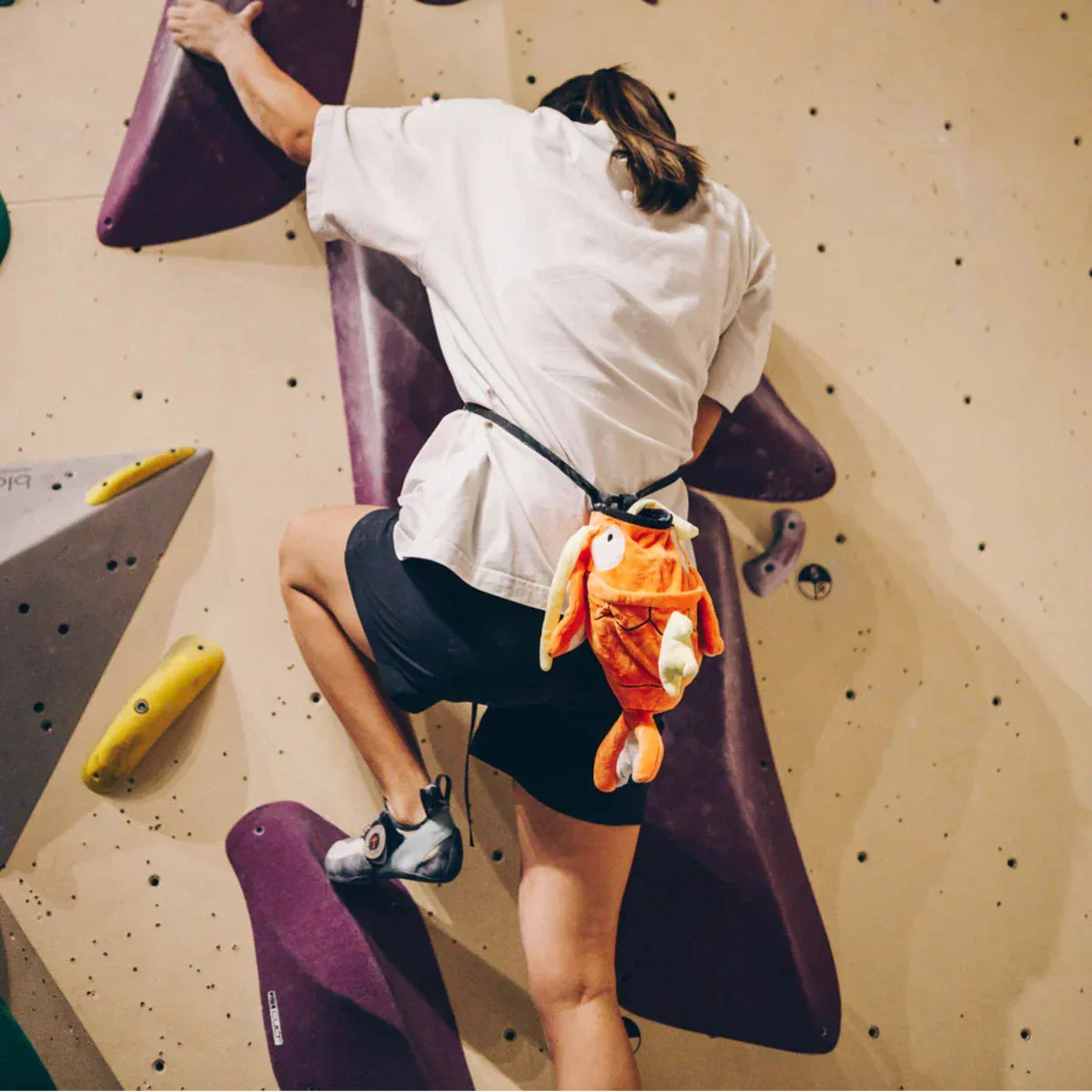
Your first bouldering session will feel unfamiliar in ways that are hard to predict. The movement isn't like anything most people have done before, and there's a reasonable chance you'll come home with forearms that feel like concrete. That's all normal.
This article walks you through what to expect — practically and physically — so you can focus on climbing instead of figuring out the basics on the fly.
Before You Arrive
Most bouldering gyms in Singapore don't require advance booking for general sessions, though some have peak-hour capacity limits. Check the gym's website or Instagram for any entry requirements, especially on weekday evenings and weekends when gyms are busiest.
Wear comfortable, close-fitting clothes you can move freely in. Loose pants can catch on holds; avoid anything that restricts hip or shoulder movement. Most people climb in athletic shorts or tights and a t-shirt. Long fingernails are a liability — trim them before your first session.
You don't need to bring anything except yourself, a pair of socks and a water bottle. Shoes, chalk, and everything else can be rented or purchased at the gym. If you want to buy chalk before arriving, a small bag of powder chalk is enough to start — you won't need liquid chalk until you're climbing more regularly.
Arrival and Orientation
At the front desk, you'll pay a day pass fee and sign a waiver. Most gyms charge separately for shoe rental if you don't have your own. First-timers are usually given a brief orientation — how the gym works, how problems are graded, basic safety — either from staff or through a short video. Pay attention to the grading system explanation; most gyms in Singapore uses its own grading (usually number) system, and the same number can mean completely different difficulty levels at different gyms.
Shoe sizing at most gyms runs slightly different from street shoes. Climbing shoes should feel snug without being painful — your toes should be close to the end of the shoe but not curled. Ask the rental staff to help you size correctly. Poorly fitted shoes won't affect a first session dramatically, but shoes that are too large will slip on footholds, which is frustrating when you're already learning.
The First Hour: What Climbing Actually Feels Like

The first thing most beginners notice is how much their forearms pump out. The gripping muscles used in climbing are rarely trained in daily life, and even easy problems cause significant forearm fatigue early on. This is completely normal and resolves as your hands adapt over weeks. Don't try to push through extreme pump — rest when your grip fails, and return when it recovers.
The second thing is how much footwork matters. Beginners instinctively rely on their arms and upper body, but climbing efficiently means using your legs to push rather than your arms to pull. Easy problems are designed to encourage this — the holds are large enough that you can focus on foot placement rather than grip strength. Try to place your feet deliberately on every hold rather than letting them find their own way.
Start on the easiest problems available and work through them methodically. There's no benefit to attempting problems above your level in the first session — technique built on easier problems transfers directly to harder ones, but technique rushed on hard problems often doesn't transfer at all.
Chalk: When and How to Use It
If you've rented or bought chalk, apply a light coating to your palms and fingers before each attempt. The goal is a thin, dry layer — enough to reduce sweat and improve grip, not so much that it cakes on your hands. In Singapore's humidity, hands sweat more than in cooler gyms, so chalk helps more here than in drier climates.
Don't over-chalk. A common beginner habit is chalking between every single attempt regardless of whether hands feel wet. Excess chalk mixes with sweat to form a paste that reduces friction rather than improving it. Chalk when your hands feel damp, not as a ritual before every go. For a full breakdown of how chalk works and how to use it properly, see the complete guide to climbing chalk.
Falling and Safety
Falling is part of bouldering. The crash pads covering the gym floor are specifically designed to absorb impact from falls at bouldering height. For your first session, stick to problems on lower-angle walls where falls are short and straightforward. Avoid attempting steep overhangs until you're comfortable with how falls feel.
When you fall, aim to land with both feet simultaneously, knees slightly bent, and roll onto your back if the impact is significant. Don't reach back with your hands to catch yourself — wrist injuries from outstretched-hand falls are the most common bouldering injury. This sounds counterintuitive but becomes instinctive quickly.
Check the landing zone before starting each problem — make sure no one is sitting or standing directly below where you might fall. Most gyms have clear norms around this and other climbers will generally move if you're about to start a problem above them.
Reading the Gym

Bouldering gyms have social rhythms that aren't immediately obvious. Problems are shared — if someone is on a problem you want to try, wait until they've finished their attempt or stepped off before starting yours. Don't start a problem directly below someone else on the wall. Give people space to work problems without an audience directly behind them unless they've invited it.
Unsolicited advice — called beta in climbing — is a sensitive area. Most climbers appreciate it when asked but find it intrusive when given beta without invitation, especially mid-attempt. If you want to know how someone solved a problem, ask after they've finished. If someone offers you beta you didn't ask for, it's fine to try their suggestion or politely decline.
Noise level varies by gym and time of day. Evening sessions at popular gyms can be loud and social; early morning sessions tend to be quieter and more focused. Both are fine — read the room and match the energy.
What Your Body Will Feel Like Afterwards
Expect forearm soreness that peaks 24–48 hours after your first session. This is delayed onset muscle soreness from muscles that haven't been used this way before and is completely normal. Your fingers may also feel stiff or slightly sore — this is the tendons and pulleys adapting to new load. Neither should be painful, just noticeably tired.
Your skin will likely feel worked. The friction from holds on skin that isn't used to it causes surface wear faster than you'd expect. Keep a skin file handy and smooth any rough edges after your session — a small rough edge that's manageable today can tear tomorrow. For a full guide on managing climbing skin, see the complete guide to climbing skin care in humid conditions.
Rest at least one day before your next session. Two days is better for a true first-timer. Tendons adapt more slowly than muscles, and the load from gripping is significant even on easy problems. Going back too soon before the adaptation begins is how minor finger soreness becomes a longer injury.
Key Takeaways
- Wear close-fitting clothes, trim your nails, and bring a water bottle — the gym handles everything else
- Ask staff to explain the gym's grading system — it won't match other gyms
- Forearm pump in the first session is normal — rest when grip fails rather than pushing through
- Focus on footwork from the start — legs do more work than arms in efficient climbing
- Chalk lightly and only when hands feel damp — over-chalking reduces grip
- Land with bent knees when falling, never reach back with outstretched hands
- Rest at least one day before your next session — tendons adapt slowly

Share:
What Is Bouldering? How It Differs from Other Types of Climbing
Bouldering Grades Explained: How the Rating System Works