



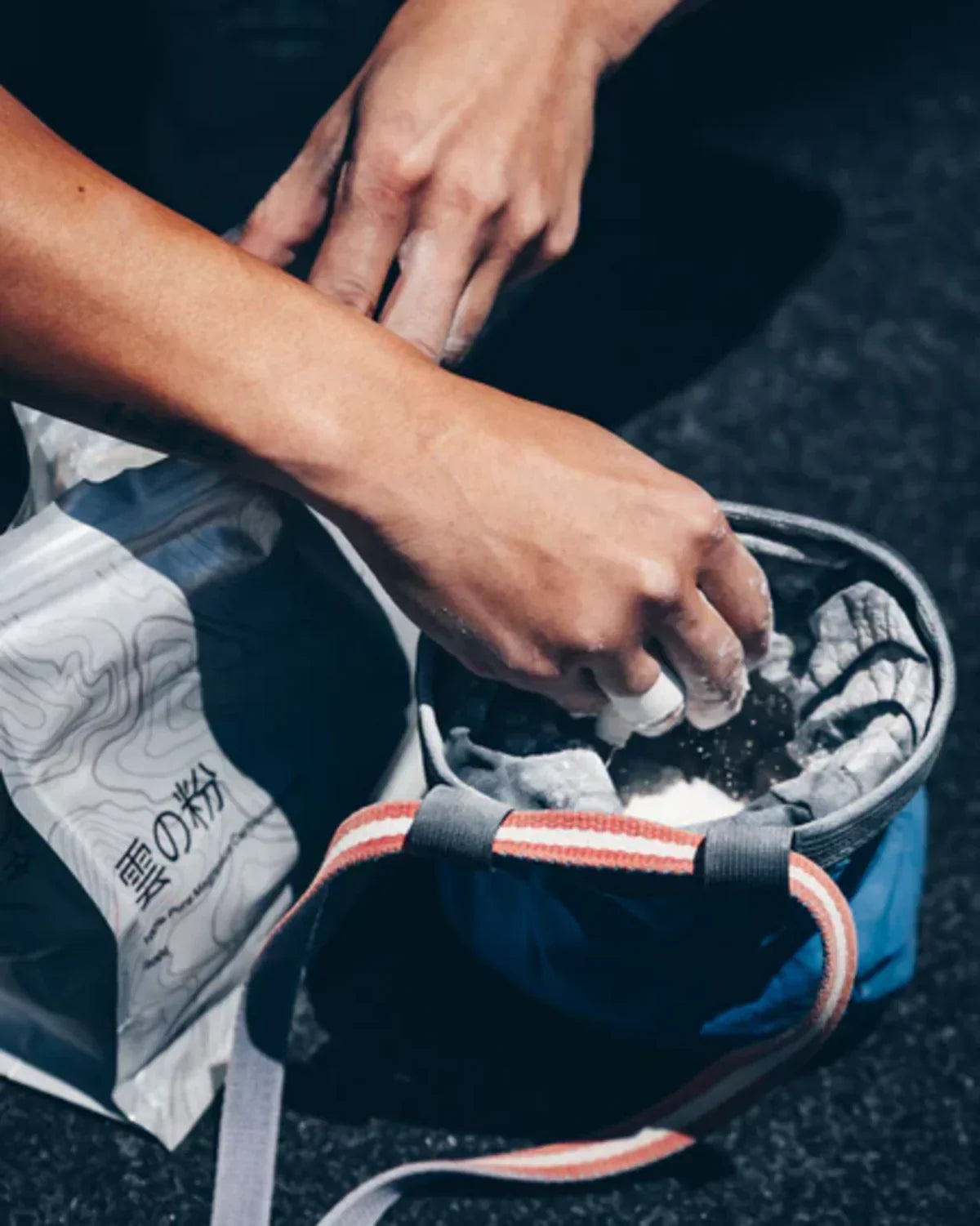
Most climbing chalk advice treats all hands the same. But sweaty hands, dry hands, and sensitive skin all respond differently to chalk — and using the wrong format or applying too much of the right one can make grip worse, not better, while accelerating skin damage in the process.
This article covers how to match chalk choice to your skin type, how to adjust for conditions, and what signs to look for that suggest your current approach isn't working.
Understanding Your Skin Type as a Climber
Skin type in a climbing context isn't just about genetics — it's about how your hands respond to exertion and heat. The relevant variables are sweat rate, baseline skin moisture, and how quickly your skin dries and cracks under repeated chalk use.
Sweaty hands produce high moisture output during climbing. Chalk is absorbed faster, grip degrades more quickly between attempts, and the temptation to over-chalk is constant. The problem isn't a lack of chalk — it's that sweat is outpacing the chalk's absorption capacity. More chalk doesn't solve this; better chalk choice does.
Dry hands start each session with low surface moisture, which means chalk actually performs well initially. The risk is cumulative drying — repeated chalk and alcohol exposure over a session, or across a training week, leads to cracking and splits. Climbers with naturally dry hands often find their skin deteriorates faster than expected despite having what seems like ideal conditions for grip.
Normal to combination hands are the middle ground — moderate sweat, manageable with standard chalk use, but still subject to the same degradation patterns over time. Most climbers fall here, but conditions in a humid gym push even normal hands toward the sweaty end of the spectrum.
Sensitive skin reacts more strongly to the alkaline pH of magnesium carbonate and the drying effect of alcohol in liquid chalk. Redness, irritation, and faster-than-average cracking are the signals. Sensitive skin doesn't mean you can't use chalk — it means the post-session care routine needs to be more consistent, and liquid chalk use should be moderated.
Sweaty Hands: What Actually Works

For climbers with sweaty hands, the instinct is to apply more chalk more often. This rarely helps and often makes things worse — excess chalk mixes with sweat to form a paste that reduces friction rather than improving it, and clogs the skin surface texture that provides grip in the first place.
The more effective approach is to focus on chalk quality and application method rather than quantity. Liquid chalk outperforms powder for sweaty hands because it bonds directly to the skin rather than sitting on top of sweat. The alcohol in liquid chalk also provides an initial drying effect that powder can't replicate.
Silica-based liquid chalk — like Thunder — is particularly suited to sweaty hands because the silica component continues absorbing moisture after the initial application, rather than just depositing a static chalk layer that sweat quickly saturates. For a full explanation of how silica chalk differs from standard magnesium carbonate, see what is climbing chalk made of.
The practical approach for sweaty hands: apply liquid chalk as a base between every few attempts, let it set fully, and use only light powder top-ups between individual attempts. Resist the urge to re-chalk heavily between every go — if the base is solid, a light dusting is enough. If it isn't, reapply liquid chalk rather than piling on powder.
Between attempts, wiping hands lightly on pants or a towel before chalking removes the sweat layer that would otherwise dilute chalk on application. It's a small habit that makes a noticeable difference over a long session.
Dry Hands: Protecting Skin Without Sacrificing Grip
Climbers with dry hands have good natural grip but are at higher risk of skin cracking under repeated chalk use. The priority is using enough chalk to manage friction without accelerating the drying that leads to splits.
Powder chalk is often sufficient for dry hands — the skin doesn't need the extra drying effect of liquid chalk's alcohol base, and powder alone provides adequate friction management for most sessions. Kumo's powder variant applies lightly and evenly, which suits dry hands better than heavier chalk formats.
If you use liquid chalk with dry hands, keep application frequency low. Use it at the start of a session or before key attempts, not as a constant reapplication. The cumulative drying from repeated alcohol exposure across a session is what causes problems — moderate use is fine, heavy use isn't.
Post-session skin care is non-negotiable for dry-handed climbers. Washing off chalk residue immediately after climbing and applying a light moisturiser before sleep offsets the drying effect of a session. Skipping this even a few times a week leads to progressive skin deterioration that compounds quickly. For more detail on the moisturising timing question, see should climbers moisturise in humid weather.
Sensitive Skin: Minimising Irritation Without Giving Up Performance

Sensitive skin requires a more conservative approach to chalk use, particularly with liquid chalk. The two main irritants are the alkaline pH of magnesium carbonate and the alcohol in liquid chalk. Both are unavoidable in climbing, but their impact can be managed.
For sensitive skin, use liquid chalk sparingly — as a base layer at the start of a session rather than repeatedly throughout. Between attempts, powder chalk is gentler on skin that reacts to alcohol.
Wash hands thoroughly after every session to remove chalk residue, which continues its alkaline effect on skin if left on. Moisturise consistently — not just when skin feels bad, but as a daily habit on climbing days. For climbers with sensitive skin, this is the most effective single intervention for reducing irritation over time.
If skin is reacting with persistent redness or unusual irritation, reduce chalk use volume first before assuming a product issue. Over-chalking is the most common cause of chalk-related skin irritation, and the fix is usually less chalk rather than different chalk.
Adjusting for Conditions, Not Just Skin Type
Skin type sets the baseline, but conditions shift the calculus. A climber with normal hands in a cool gym may find powder chalk entirely sufficient. The same climber in a hot, humid Singapore gym mid-summer is effectively a sweaty-hands climber for that session, and should adjust accordingly.
The signals to watch for mid-session: chalk that feels wet on application rather than dry, grip that degrades unusually fast, or hands that feel coated rather than dry after chalking. Any of these suggests conditions have pushed beyond what your current chalk approach can handle — switch to liquid chalk base, reduce powder top-up frequency, and consider wiping hands between attempts.
Conversely, if skin is feeling tight or sensitive mid-session, that's a sign of over-drying — reduce chalk frequency and skip the liquid chalk top-ups for the remainder of the session.
For a broader look at how chalk performs differently across humid gym conditions, see the complete guide to climbing chalk in humid conditions.
A Note on Chalk Volume Across All Skin Types
Regardless of skin type, less chalk is almost always more effective than more. The goal is a thin, even layer — enough to absorb surface moisture and improve friction, not enough to cake, clump, or dilute with sweat. Climbers who chalk heavily and frequently tend to have worse grip consistency than those who apply less chalk more deliberately, because excess chalk creates its own friction problems.
If you find yourself re-chalking after every single attempt, the issue is usually technique or conditions rather than chalk quantity. A solid liquid chalk base with light powder top-ups should hold through multiple attempts without full reapplication. If it isn't, the problem is more likely application method than skin type — see how to use liquid chalk properly for a full breakdown.
Key Takeaways
- Sweaty hands: liquid chalk base is essential — silica formulations like Thunder handle sustained moisture better than standard powder
- Dry hands: powder chalk is often sufficient; limit liquid chalk frequency to reduce cumulative drying
- Sensitive skin: use liquid chalk sparingly, wash hands thoroughly post-session, and moisturise consistently
- All skin types: less chalk applied more deliberately outperforms heavy frequent chalking
- Conditions shift your effective skin type — adjust chalk approach based on how the session is going, not just baseline skin type


Share:
Does Climbing Chalk Expire or Go Bad?
Is Too Much Chalk Bad for Your Climbing?