



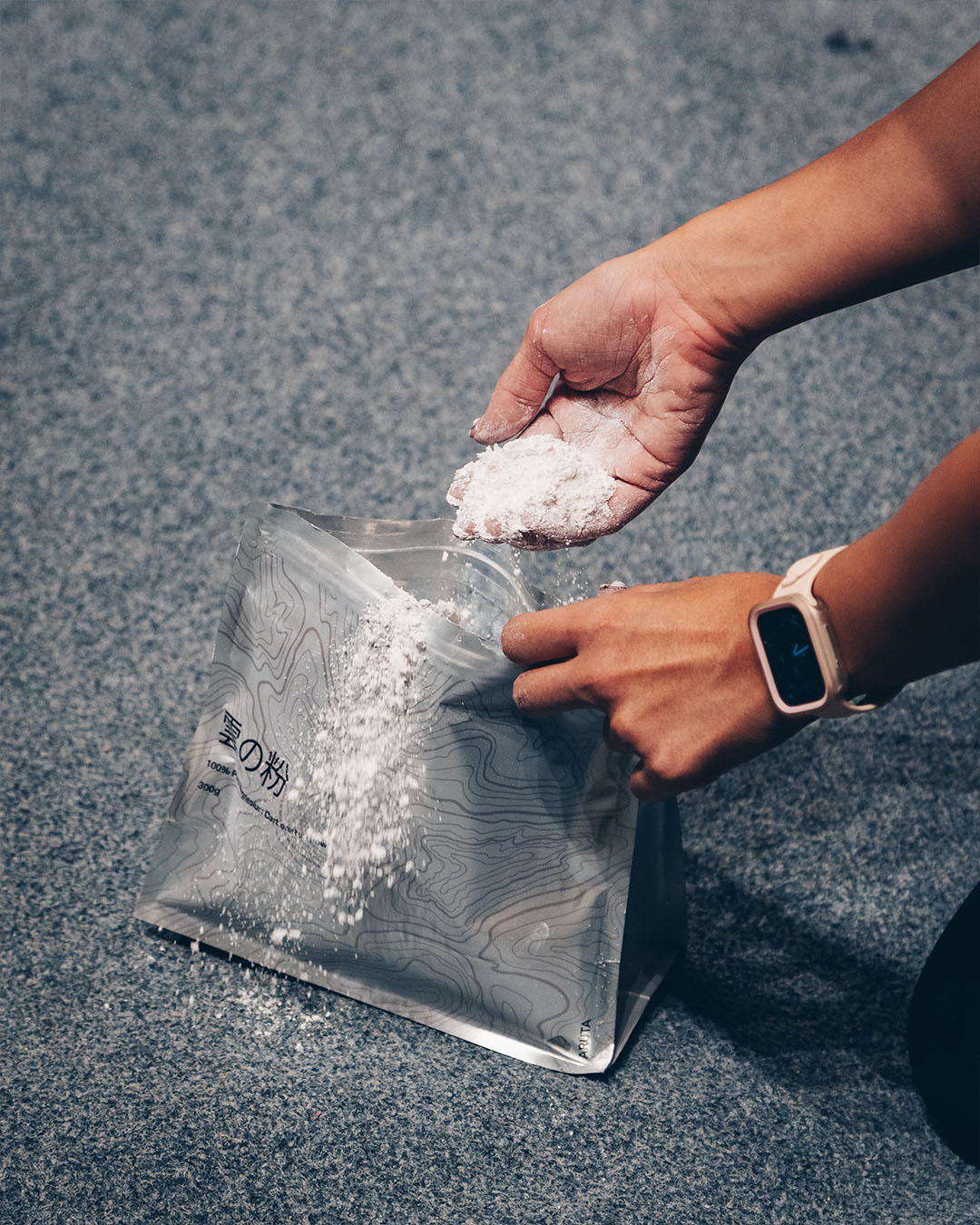
Climbing chalk looks simple — a white powder you rub on your hands before a climb. But not all chalk is the same, and the differences in composition affect how it performs on your skin, how long it lasts mid-session, and how well it holds up in humid conditions.
This article breaks down what climbing chalk is actually made of, how the main types differ, and why composition matters more than most climbers realise.
The Basics: Magnesium Carbonate

Standard climbing chalk is magnesium carbonate — chemical formula MgCO₃. It's the same compound used by gymnasts, weightlifters, and powerlifters, though climbing chalk is typically processed to a finer consistency than gym chalk.
Magnesium carbonate works by absorbing moisture from the skin's surface, reducing the layer of sweat that would otherwise reduce friction between your fingers and the hold. It also increases the coefficient of friction between skin and rock or resin directly, though the moisture absorption effect is the more significant of the two.
Magnesium carbonate is not the same as calcium carbonate — the chalk used in classrooms. Calcium carbonate is softer, doesn't absorb moisture effectively, and would be useless for climbing. The naming overlap causes confusion, but the chemistry is completely different.
Powder Chalk: Fine vs Chunky

Powder chalk is milled magnesium carbonate. The main variable is particle size, which affects how the chalk feels on the skin and how it distributes across a hold.
Fine chalk — fully milled to a consistent powder — spreads easily and evenly. It absorbs moisture quickly and provides a smooth, thin coating. It's well suited to humid conditions where fast absorption matters, and to climbers who prefer lighter chalk application.
Chunky or block chalk is less processed, leaving larger irregular pieces. Some climbers prefer the texture and the slightly slower breakdown, which can feel more controlled during application. Block chalk can be crushed to a preferred consistency or used directly.
Mix variants combine fine powder with small chunks, giving the fast-spreading properties of fine chalk with some texture from the larger pieces. Kumo comes in both a powder variant — fully fine — and a mix variant for climbers who want that middle ground.
Liquid Chalk: What's Actually in It

Liquid chalk is a suspension of magnesium carbonate in alcohol — typically isopropyl or ethanol. When applied to the hands, the alcohol evaporates quickly, leaving a thin, even layer of chalk directly bonded to the skin surface.
The alcohol serves two purposes: it acts as the carrier that allows chalk to be applied as a liquid, and it provides an additional drying effect on the skin as it evaporates. This double action — chalk layer plus alcohol drying — is why liquid chalk tends to outperform powder in high-humidity environments, at least as a base layer.
The chalk-to-alcohol ratio matters. Too much alcohol and the layer is thin and short-lived; too little and the liquid doesn't spread or dry properly. The specific alcohol used also affects skin feel — ethanol tends to be gentler than isopropyl for climbers with sensitive or already-dry skin.
Some liquid chalks — including Thunder — use silica as part of the formulation. Silica is a desiccant: it absorbs and holds moisture rather than simply depositing a chalk layer. In humid conditions, this means the coating continues managing moisture actively rather than just providing an initial dry surface that sweat quickly breaks down.
Silica Chalk vs Standard Magnesium Carbonate

Standard liquid chalk uses magnesium carbonate suspended in alcohol. Silica-based liquid chalk replaces some or all of the magnesium carbonate with silicon dioxide — the same compound found in the small desiccant packets used to keep packaged goods dry.
The practical difference is in how each handles sustained moisture. Magnesium carbonate absorbs moisture to a point, then becomes saturated and stops working. Silica has a higher moisture capacity and continues absorbing after standard chalk would have failed. For short sessions in moderate humidity, the difference is marginal. For longer sessions in a hot, humid gym — which describes most indoor climbing in Singapore — silica chalk tends to maintain friction consistency noticeably better into the second half of a session.
Silica chalk also tends to leave less residue on holds, which matters for gym etiquette and hold maintenance over time.
What Chalk Composition Means for Skin

The chemistry of chalk has direct consequences for skin health, not just grip performance. Magnesium carbonate is mildly alkaline, which means it disrupts the skin's natural slightly-acidic pH over time. Repeated chalk use without proper post-session washing and moisturising leads to progressively drier, more brittle skin — which increases crack and split risk regardless of how good your callus condition is.
Alcohol in liquid chalk amplifies this effect. The drying action that makes liquid chalk useful for grip also draws moisture out of the deeper skin layers with repeated use. Climbers who use liquid chalk heavily across multiple sessions a week are at higher risk of skin cracking than those who use powder alone or combine both formats carefully.
This doesn't mean liquid chalk should be avoided — the friction benefits in humid conditions are real. It means the post-session skin care routine matters more for liquid chalk users. Washing off chalk residue after every session and moisturising before sleep offsets most of the drying effect. For more on managing skin around chalk use, see the complete guide to climbing chalk in humid conditions.
Does Chalk Quality Actually Vary?

Yes, though it's not always obvious from packaging. The main quality variables in magnesium carbonate chalk are purity, particle consistency, and processing.
Purity affects how cleanly chalk absorbs moisture. Lower-purity chalk may contain fillers or inconsistent mineral content that reduces moisture absorption and leaves more residue on holds. Particle consistency affects how evenly chalk spreads — poorly milled chalk has an uneven mix of fine and coarse particles that distributes unevenly across the skin surface.
For liquid chalk, quality variables include the chalk-to-alcohol ratio, the specific alcohol used, and whether any additional ingredients — like silica or skin conditioning agents — are included and in what proportions. A liquid chalk that dries too fast may not spread evenly before the alcohol evaporates; one that dries too slowly leaves hands feeling wet rather than chalked.
The practical test is consistency across a session: good chalk should feel roughly the same on your hands at attempt five as it did at attempt one, with normal re-application. Chalk that degrades quickly, clumps on the skin, or leaves hands feeling greasy rather than dry is usually a quality or formulation issue rather than a humidity problem.
Key Takeaways
- Climbing chalk is magnesium carbonate — not the same as blackboard chalk
- Powder chalk varies by particle size: fine spreads faster, chunky gives more texture
- Liquid chalk suspends magnesium carbonate in alcohol; the alcohol evaporates and leaves a chalk layer
- Silica-based liquid chalk absorbs moisture actively rather than just depositing a dry layer — more effective in sustained humidity
- All chalk is mildly alkaline and drying; post-session skin care matters more for frequent chalk users
- Chalk quality varies — consistency across a session is the practical test
-- SUGGESTED CLOSING IMAGE: KUMO and THUNDER product shot together — natural close for an article that covers both formats -->

Share:
The Complete Guide to Climbing Skin Care in Humid Conditions
How to Use Liquid Chalk Properly for Climbing