



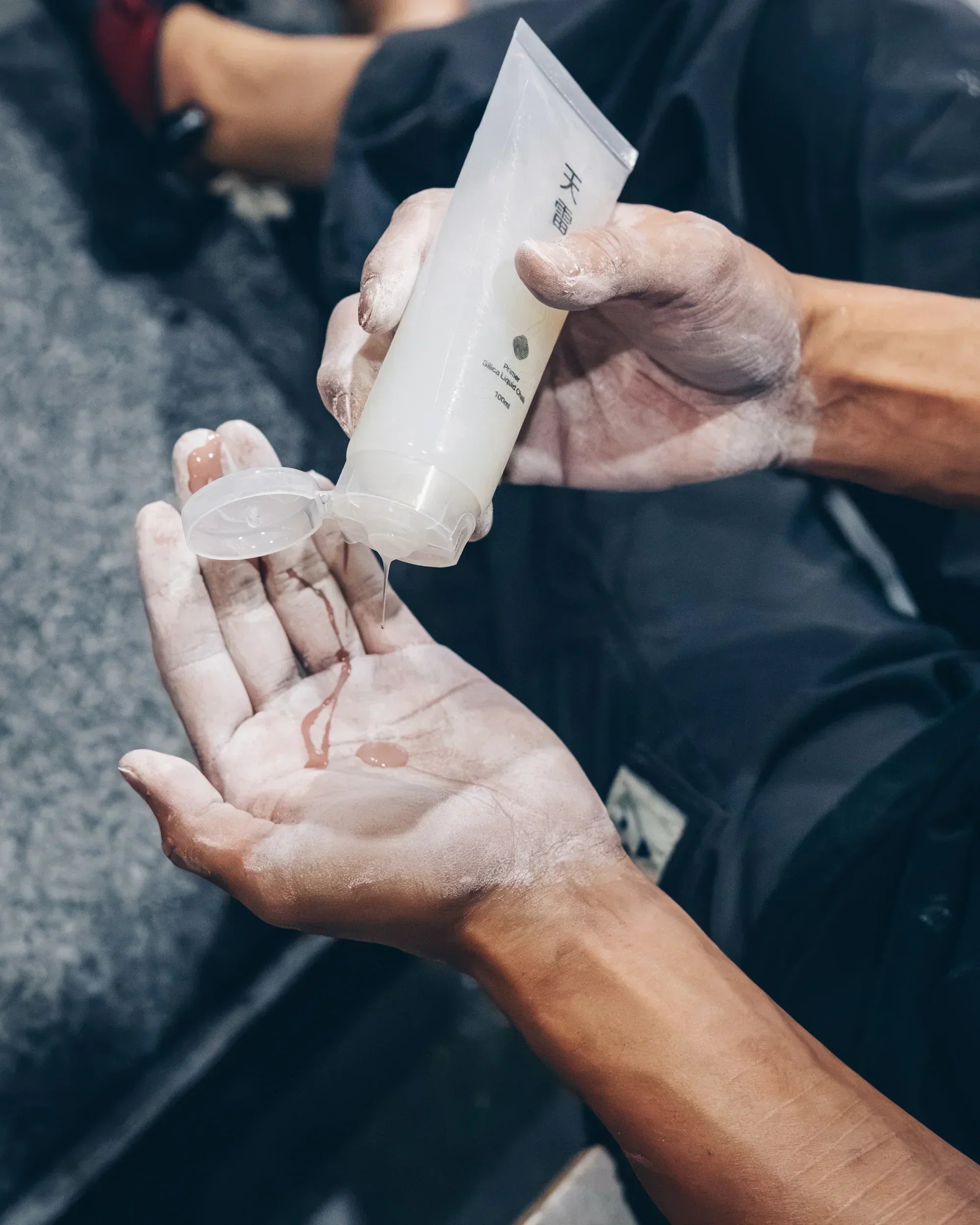
Liquid chalk has a reputation for being the better option in humid gyms — and in most cases, that's true. But it's also one of the most misused products in climbing. Too much, applied at the wrong time, in the wrong way, and it either doesn't work or actively makes things worse.
This article covers how to actually use liquid chalk properly: how to apply it, when to use it, how to combine it with powder, and the mistakes that reduce its effectiveness.
How Liquid Chalk Works
Liquid chalk is magnesium carbonate suspended in alcohol. When you apply it to your hands, the alcohol evaporates within 20–30 seconds and leaves a thin, even chalk layer bonded directly to the skin. Because it's applied as a liquid, it gets into the skin's surface texture more thoroughly than powder, which sits on top.
The alcohol also provides an initial drying effect as it evaporates — stripping surface moisture before the chalk layer sets. This is why liquid chalk performs well as a base in humid conditions: it dries the skin and deposits chalk in a single step, giving you a more stable starting point than powder alone.
Silica-based liquid chalk — like Thunder — adds a desiccant component that continues absorbing moisture after the initial application, rather than just depositing a static chalk layer. In sustained humidity, this makes a noticeable difference to how long the base holds before sweat breaks it down. For more on how silica chalk differs from standard magnesium carbonate, see what is climbing chalk made of.
How to Apply It Correctly

The most common mistake with liquid chalk is using too much. A small amount — roughly the size of a 50-cent coin dispensed into one palm — is enough for both hands. More than that doesn't improve friction; it extends drying time, leaves excess residue, and wastes product.
Rub hands together thoroughly, covering the entire palm, each finger, and down to the first knuckle. Pay attention to the finger pads and the areas between fingers where skin contacts holds on open-hand grips. Keep rubbing until the liquid is fully distributed and the alcohol smell fades — that's the signal that the alcohol has evaporated and the chalk layer has set.
Don't blow on your hands to speed up drying. It introduces moisture back onto the surface before the chalk has fully set. Just rub until dry.
Wait a full 20–30 seconds after application before climbing. Liquid chalk that hasn't fully dried transfers onto holds rather than staying on your skin, which defeats the purpose and leaves greasy patches on the wall.
When to Use It During a Session
Liquid chalk works best as a base layer — applied at the start of a session, before your first attempt, and after any significant break where sweat has accumulated. It's not designed for quick reapplication between attempts the way powder is. The alcohol needs time to evaporate; trying to use liquid chalk as a fast top-up mid-session means you're climbing before it's set.
The practical session structure that works well in humid gyms: apply liquid chalk before your first attempt and let it set fully. Use Kumo powder lightly on top between attempts to manage sweat as it builds. When you feel the base layer has broken down — usually after several attempts or a longer rest — reapply liquid chalk and let it set before continuing.
How often you need to reapply the base depends on sweat rate and session intensity. Most climbers in Singapore find once every 45–60 minutes is enough; high-intensity sessions or particularly warm gyms may need more frequent resets.
Combining Liquid and Powder Chalk

Liquid and powder chalk are complementary, not interchangeable. Liquid chalk provides the base; powder chalk manages ongoing moisture between attempts. Using only liquid chalk means frequent full reapplication cycles that interrupt climbing rhythm. Using only powder in a humid gym means the base layer is never as stable as it could be.
The combination approach: liquid chalk base at the start of each attempt series, light powder top-ups between individual attempts. The keyword is light — dusting, not coating. Powder on top of a liquid chalk base that hasn't broken down yet just adds unnecessary buildup that flakes off onto holds.
One thing to avoid: applying liquid chalk on top of heavy powder buildup. The alcohol doesn't penetrate through excess powder to reach the skin, so the chalk layer doesn't bond properly. If hands are heavily chalked from powder, wipe them on your pants first, then apply liquid chalk to get a clean base.
Common Mistakes
Applying too much. The instinct when friction is poor is to add more chalk. With liquid chalk, this usually makes things worse — excess product takes longer to dry, transfers onto holds, and leaves hands feeling coated rather than dry. Less is consistently more.
Not waiting for it to dry. Liquid chalk that isn't fully set feels slightly tacky and transfers easily. If your hands feel wet or the alcohol smell is still strong, wait another 10 seconds before touching a hold.
Using it as a mid-attempt top-up. Liquid chalk is a base layer tool. If you need friction between attempts, use powder. Reaching for liquid chalk between every go adds unnecessary drying to skin that's already being stressed by the session.
Storing it in a hot bag. Heat affects liquid chalk consistency — leaving it in a bag in direct sunlight or a hot car can cause the suspension to separate. Store at room temperature and shake before use if it's been sitting a while.
Liquid Chalk and Skin Care
The alcohol in liquid chalk is the main skin care consideration. Used in moderation — as a base layer rather than a constant reapplication — the drying effect is manageable. Used heavily across back-to-back sessions without proper post-session care, it leads to cumulative skin drying that increases crack and split risk.
The offset is straightforward: wash hands thoroughly after every session to remove chalk residue, and moisturise before sleep. Climbers who use liquid chalk regularly should treat post-session moisturising as non-negotiable rather than optional. For a full breakdown of skin care around chalk use, see the complete guide to climbing chalk in humid conditions.
Key Takeaways
- Use a small amount — roughly a 50-cent coin's worth — for both hands
- Rub thoroughly until fully dry before touching a hold; 20–30 seconds minimum
- Use liquid chalk as a base layer, not a between-attempt top-up
- Combine with powder chalk for ongoing moisture management mid-session
- Don't apply liquid chalk over heavy powder buildup — wipe hands first
- Moisturise post-session to offset the cumulative drying effect of alcohol

Share:
What Is Climbing Chalk Made Of?
Chalk Bag vs Chalk Ball vs Loose Chalk — Which Should You Use?