



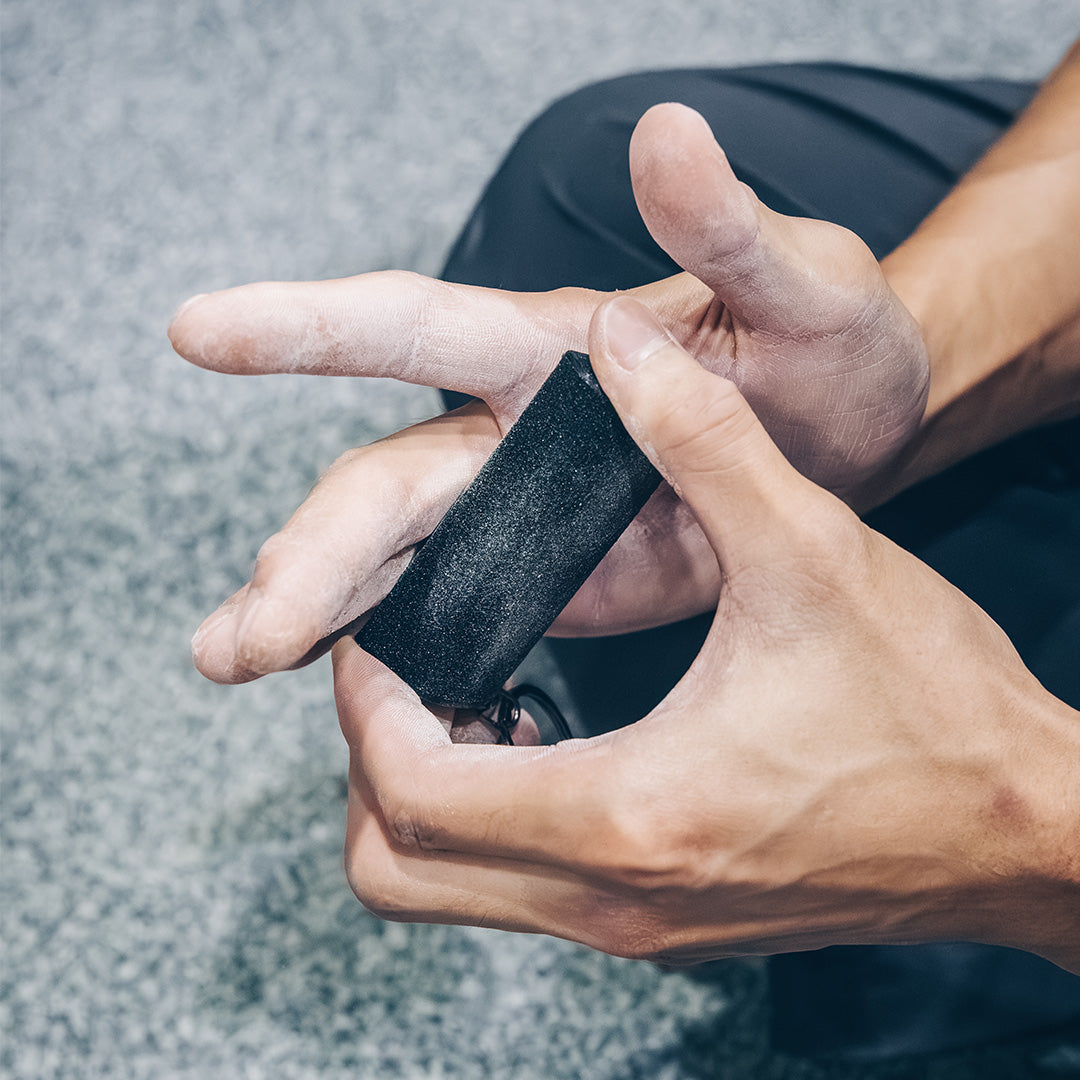
Filing Calluses Properly for Maximum Friction (Especially in Humid Gyms)
Calluses are supposed to protect your skin — but thick, uneven calluses can actually reduce friction and make tears more likely. This is especially true in humid gyms, where moisture softens skin and makes high spots catch and shear under load.
Filing isn’t about making your fingertips “soft.” It’s about keeping the surface even, resilient, and predictable so you get consistent friction without sacrificing durability.
Why Uneven Calluses Reduce Friction
Friction depends on how consistently your skin contacts the hold. When calluses form ridges or high spots, pressure concentrates on small areas instead of spreading evenly. In practice, this causes two problems:
- Less stable contact: the high spot skates or rolls, reducing usable friction
- More tearing risk: the edge catches and peels under sudden load
In humid conditions, skin softens faster, making these high spots even more likely to shift and shear.
Signs You Should File
You don’t need to file every day. Instead, look for these simple signs:
- Raised edges that feel “grippy” on fabric or catch on holds
- Shiny, glassy patches that feel slick even when chalked
- Thick pads that start to fold or crease under pressure
- Recurring hot spots in the same area session after session

What Tools Work Best (And What to Avoid)
Best options
- Fine sandpaper (around 180–240 grit): controlled, consistent removal
- Emery board / nail file: good for small touch-ups and travel
- Pumice stone: can work, but less precise
Use caution
- Razors or blades: fast but easy to overdo; increases sensitivity if you go too deep
- Very coarse grit: removes too much too quickly and can leave raw patches
The goal is gradual leveling, not aggressive removal.
How to File Calluses Properly
This process takes 3–5 minutes and works best after a shower or after washing your hands, when the skin is slightly softened (but not waterlogged).
Step 1: Identify the high spots
Run your fingertip across the pad. Focus on raised edges, ridges, and thick patches — not the entire finger.
Step 2: File lightly in one direction
Use gentle pressure. A few passes are often enough. If you feel heat or tenderness, stop early.
Step 3: Round off sharp edges
Most flappers start from a sharp transition. Smoothing that edge is often more important than thinning the whole callus.
Step 4: Check for an even surface
Your skin should feel smooth and uniform, not thin. If you can still feel a ridge, do a few more light passes.
How Often Should You File in Humid Gyms?
Most climbers do well with:
- Light touch-ups: 1–2 times per week
- More frequent touch-ups: if you train 4+ days per week, climb on sharp textures, or sweat heavily
In humid gyms, skin changes faster during sessions. Filing helps your skin start “even,” which improves friction consistency as moisture builds up.
Common Filing Mistakes
- Over-filing: causes tenderness, sensitivity, and early-session pain
- Filing right before a session: can leave skin too fresh for hard climbing
- Ignoring edges: thick edges are what peel first
- Trying to remove all callus: you want protection, just not ridges
If your fingertips feel sore during warm-up, you likely filed too aggressively or too recently.
Final Takeaways
- Uneven calluses reduce friction and increase tear risk
- In humid gyms, softened skin makes ridges more likely to shear
- File lightly to level high spots and round edges
- Consistency beats intensity — small touch-ups work best
Filing calluses is one of the simplest ways to improve friction consistency in humid climbing gyms. Done correctly, it reduces flappers and helps your skin last longer across multiple sessions.


Share:
Why Your Skin Wears Faster in Humid Gyms
Should Climbers Moisturise in Humid Weather?