



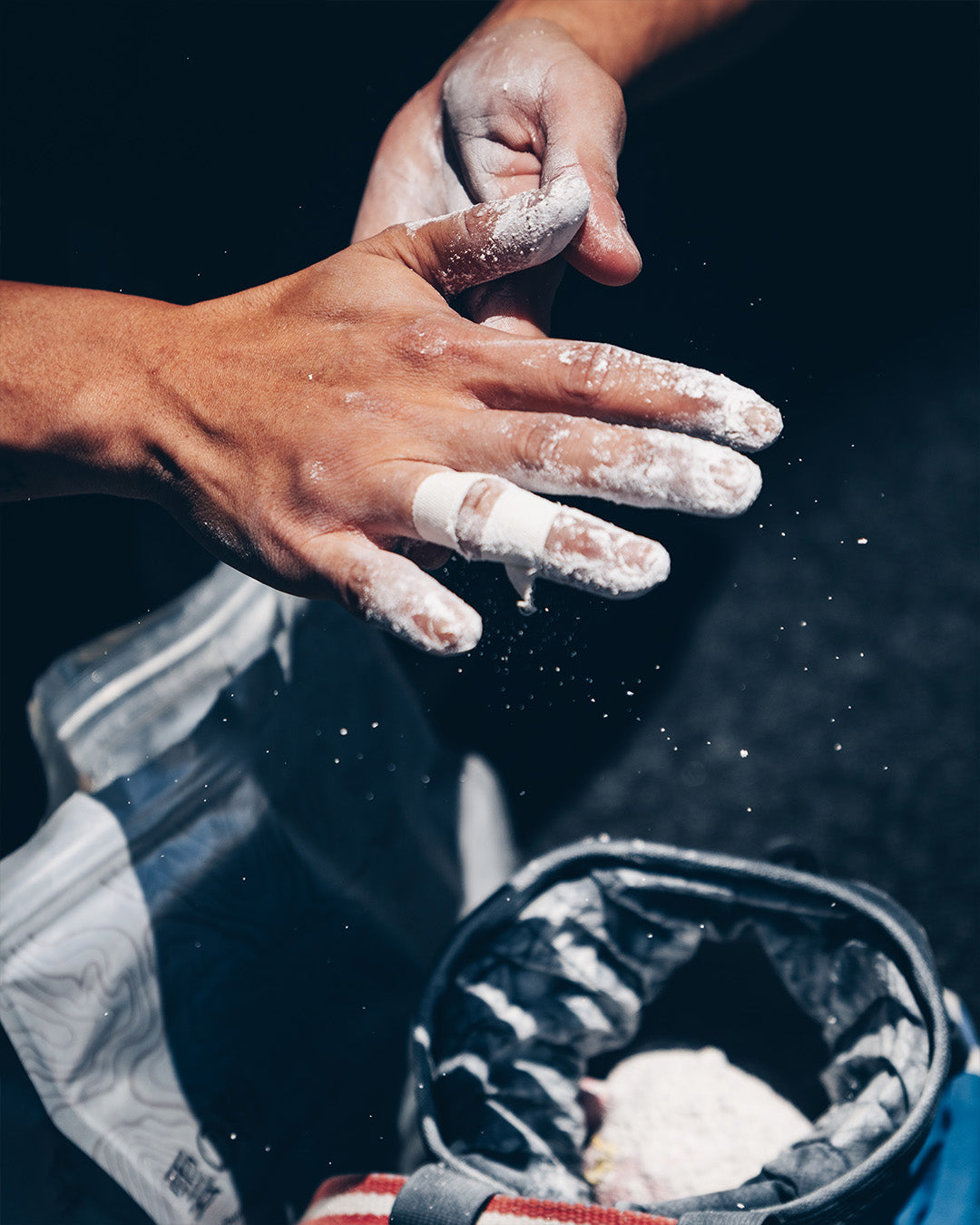
Why Your Skin Wears Faster in Humid Gyms
If you climb regularly in Singapore or other humid parts of Southeast Asia, you may notice this pattern: your skin feels fine at the start of a session, but wears down faster than expected as the day goes on. You might get glassy fingertips, hot spots, or even flappers on problems that normally feel manageable.
This isn’t just “weak skin.” Humidity changes how your skin behaves under load. When you understand the mechanisms, you can make small adjustments that protect your skin and keep friction more consistent over long sessions.
Humidity Softens Skin Faster Than You Think
In humid environments, sweat doesn’t evaporate as efficiently. Moisture stays on the skin longer, which softens the outer layer of the fingertips. Softer skin deforms more under pressure and shears more easily against textured holds. The result is faster wear, even if you feel like you are chalking normally.
This is one reason climbers often report that friction feels unpredictable in humid gyms: skin condition changes throughout the session, not just between sessions.
Sweat Causes “Micro-Soaking” During Sessions
Even if your hands don’t feel drenched, repeated contact with holds plus a warm environment can create a constant film of moisture. Over time, this can lead to a subtle form of maceration — the same effect you get when your skin wrinkles after being in water too long, but at a smaller scale.
When skin is slightly waterlogged, it loses resilience. It becomes more prone to slipping on contact and tearing when you load it suddenly on small edges or sharp textures.

Heat Increases Shear Stress on Your Finger Pads
Warm temperatures increase blood flow and sweat output. That means more moisture returning to the skin surface, and less time for chalk to keep hands dry. When sweat increases mid-session, the same movement patterns you were doing earlier begin to produce more rubbing and heat at the skin surface.
This leads to “hot fingertips,” where the skin feels tender and friction drops. Many climbers respond by chalking more, but without addressing moisture and skin softness, wear continues.
Chalk Can Contribute to Wear When Used Aggressively
Chalk is essential for friction, but too much chalk can also increase abrasion. In humid gyms, chalk often clumps and becomes gritty. When you repeatedly drag gritty chalk across textured holds, you can sand your own skin down faster than intended.
The goal isn’t maximum chalk. The goal is stable friction with minimal abrasion.
Why Your Skin Feels Fine Early, Then Fails Later
Most climbers don’t start a session fully sweaty. Early climbs feel great because your skin is drier and firmer. As you warm up, sweat increases and humidity prevents efficient evaporation. Skin gradually softens, chalk breaks down faster, and friction becomes harder to maintain.
This is why “skin endurance” matters in humid gyms. It’s less about toughness and more about managing the conditions that change your skin mid-session.
What You Can Do: Simple Adjustments That Work
- Wash and dry hands mid-session: Removing skin oils and chalk paste resets friction more effectively than adding more chalk.
- Apply chalk lightly but more deliberately: Avoid thick layers that turn gritty or pasty in humidity.
- Take slightly longer rests: Cooling down reduces sweat output and helps skin firm up again.
- Be strategic with attempts: Don’t burn your best skin on low-value tries. Save high-friction attempts for when your skin feels firm.

Final Takeaways
- Humidity reduces evaporation and softens skin faster during sessions
- Subtle maceration makes skin more prone to slipping and tearing
- Heat increases sweat output and skin shear over time
- Stable friction comes from managing moisture, not just adding more chalk
If you climb frequently in humid gyms, skin management is a performance skill. The good news is that small habit changes can dramatically improve how long your skin lasts — and how consistent friction feels across a full session.
Share:
How to Improve Friction in Humid Climbing Gyms (Beyond Chalk)
Filing Calluses Properly for Maximum Friction (Especially in Humid Gyms)