



Walk into any climbing gym and you'll see climbers using chalk differently. Some dip into a bag of loose powder, others squeeze a chalk ball, some apply liquid chalk before touching the wall. The format you use affects how much chalk you apply, how consistently it goes on, and how your skin holds up across a session.
This article breaks down the three main chalk formats — chalk bags with loose chalk, chalk balls, and liquid chalk — what each one does well, and how to choose based on how you climb.
Loose Chalk in a Chalk Bag

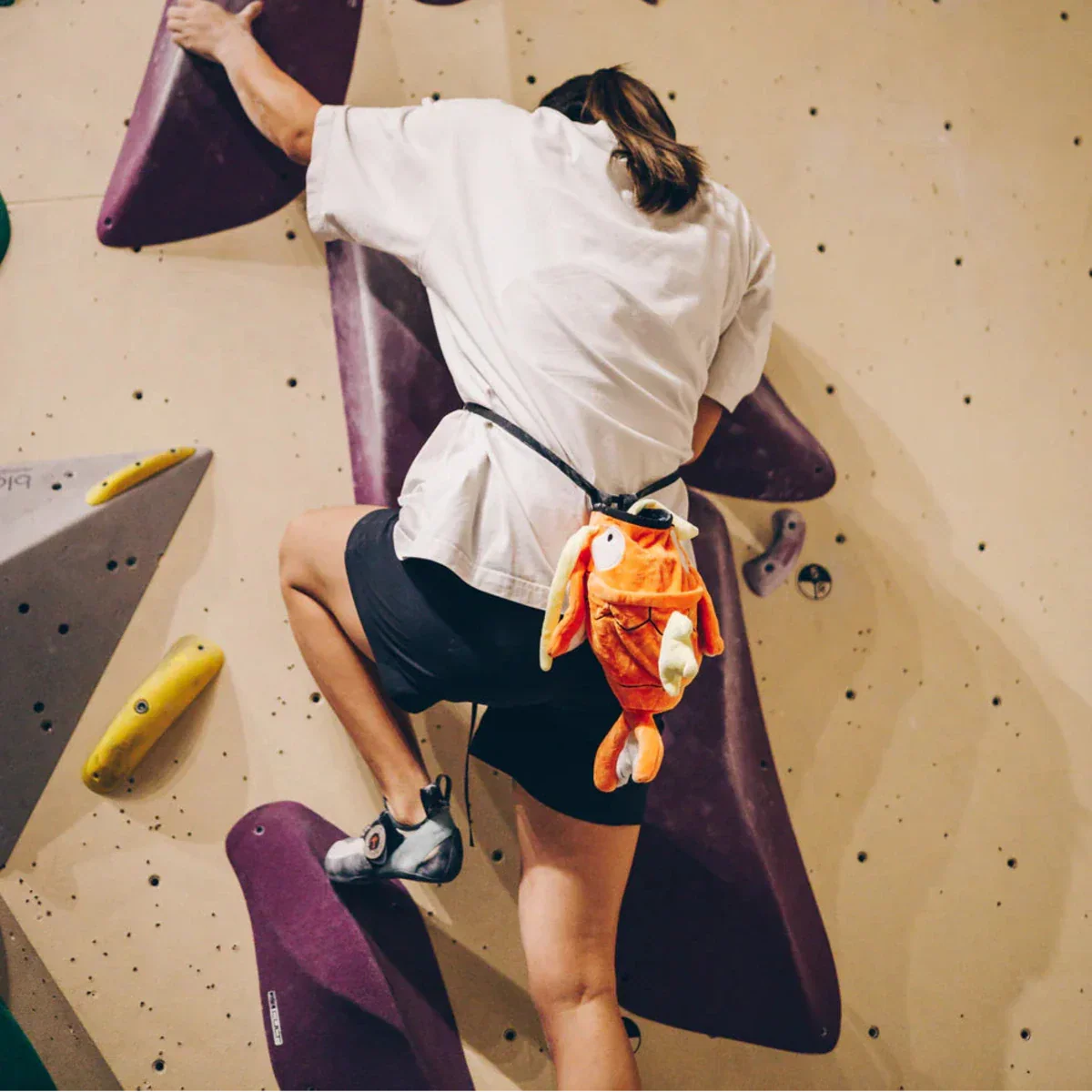
Loose chalk is the most common format. You fill a chalk bag with powder or a mix of powder and chunks, clip it to your harness or leave it on the mat, and dip your hands between attempts. It's fast, easy to apply in the right amount, and gives you direct control over how much chalk you're using at any moment.
The main advantage is speed and flexibility. A quick dip coats your hands evenly, and you can apply as little or as much as needed. For bouldering sessions with short attempts and frequent rests, loose chalk in a chalk bag is the most natural fit.
The downside is dust. Loose chalk produces more airborne particles than any other format, which affects air quality in enclosed gyms and contributes to hold buildup over time. Some gyms restrict loose chalk or require chalk balls for this reason — worth checking your gym's policy before showing up with an open bag of powder.
In humid conditions, loose chalk absorbs moisture from the air faster than other formats. A bag left open in a humid gym will start clumping within a session. Keeping the bag closed between attempts and using a zip-top chalk bag helps slow this down. Kumo is available in powder and mix variants — the powder variant works well as a loose chalk top-up, while the mix adds some texture for climbers who prefer it.
Chalk Balls
A chalk ball is a mesh or fabric pouch filled with fine chalk powder. Instead of dipping directly into loose chalk, you squeeze or rub the ball against your hands, which releases chalk through the mesh in a controlled, low-dust application.
The main advantage is dust reduction. Chalk balls produce significantly less airborne chalk than loose powder, which is why many gyms either require them or strongly encourage them. If your gym has a chalk policy, a chalk ball is usually the compliant option.
The trade-off is application control. Chalk balls release chalk more slowly than a direct dip, which means they can struggle to deliver enough coverage during high-sweat sessions. In humid gyms where hands are sweating heavily, a chalk ball may not apply chalk fast enough to keep up with moisture. Many climbers who use chalk balls in gym sessions switch to loose chalk for outdoor climbing or competitions where gym policies don't apply.
Chalk balls also eventually run out and need refilling or replacing. If you're refilling, use fine chalk powder — coarser particles don't pass through the mesh as well and reduce the ball's effectiveness over time.
Liquid Chalk
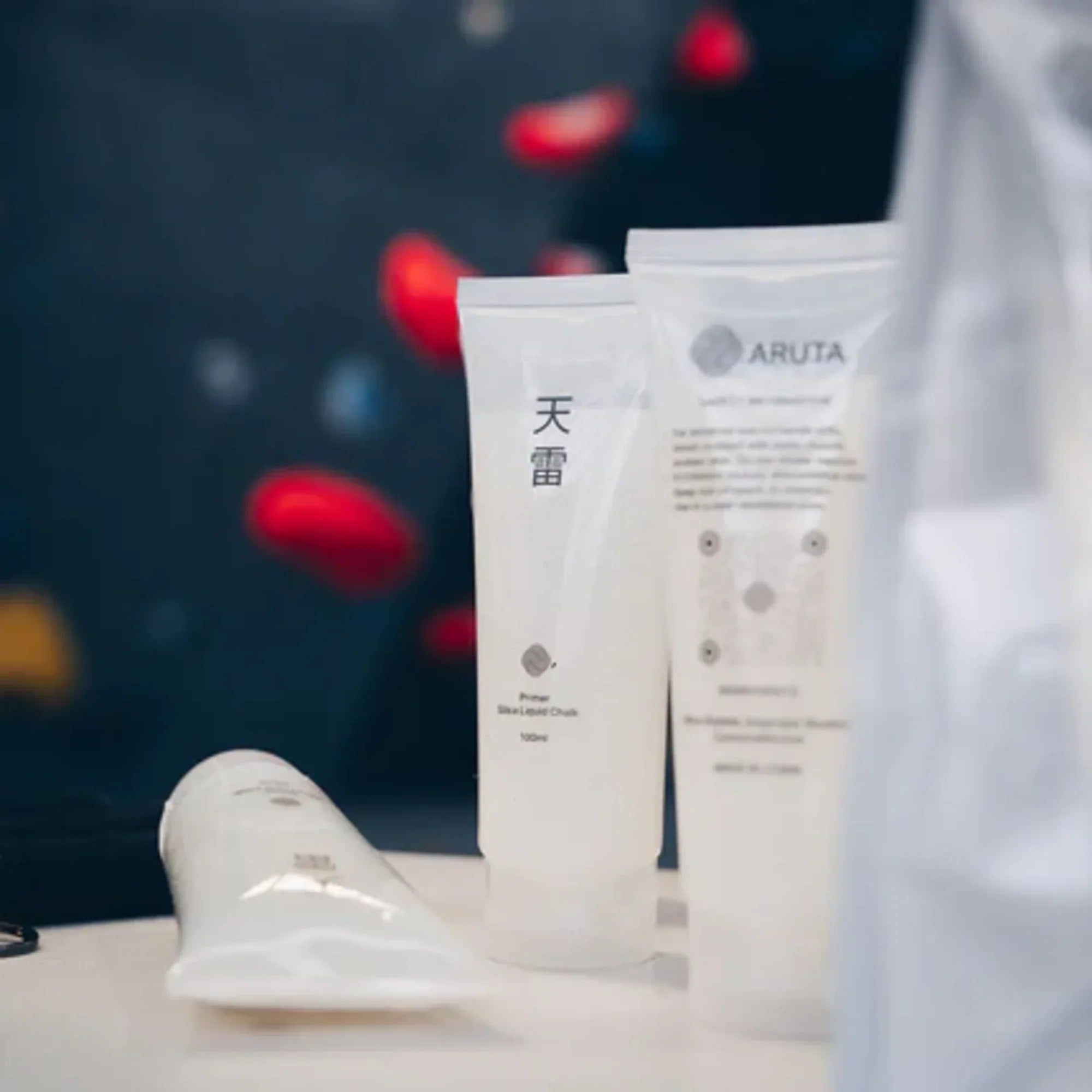
Liquid chalk is magnesium carbonate suspended in alcohol. Applied to the hands before climbing, the alcohol evaporates and leaves a thin chalk layer bonded directly to the skin. It produces almost no airborne dust, lasts longer than loose chalk as a base layer, and is the format most suited to humid conditions.
The key distinction from the other two formats is that liquid chalk is a base layer tool, not a between-attempt top-up. You apply it before your first attempt, let it set fully (20–30 seconds), and then use loose chalk or a chalk ball on top as needed. Trying to use liquid chalk as a quick mid-session reapplication doesn't work well — the alcohol needs time to evaporate before the chalk layer is effective.
For a full breakdown of how to apply liquid chalk correctly and when to use it during a session, see how to use liquid chalk properly.
The skin care consideration with liquid chalk is the alcohol content. Used consistently across multiple sessions without proper post-session washing and moisturising, it can cause cumulative skin drying. This is manageable with a basic routine but worth knowing if you're switching from powder-only to liquid chalk. For more on the chemistry behind liquid chalk, see what is climbing chalk made of.
Thunder is a silica-based liquid chalk, which means it continues absorbing moisture after the initial application rather than just depositing a static layer — the difference matters in sustained humidity, particularly in the second half of a long session.
Which Format Is Best for Humid Gyms?

The short answer: liquid chalk as a base, loose powder on top. This combination addresses the two main problems of humid climbing — unstable grip at the start of attempts, and sweat buildup during them.
Liquid chalk sets a stable foundation that holds better than powder alone in humid conditions. Loose powder on top manages ongoing moisture between attempts without requiring full reapplication. Chalk balls can substitute for loose powder if your gym requires them, but they're slower to apply and less effective in high-sweat situations.
Using only loose chalk in a humid gym means constantly fighting sweat with more chalk, which leads to over-chalking and eventually worse grip rather than better. Using only liquid chalk means waiting for it to set every time you reapply, which breaks climbing rhythm. The combination avoids both problems. For more on chalk performance in humid conditions specifically, see the complete guide to climbing chalk in humid conditions.
Choosing Based on How You Climb
Bouldering in a humid gym: liquid chalk base plus loose powder top-up. Keep the chalk bag closed between attempts to slow moisture absorption.
Gym with a strict chalk policy: liquid chalk base plus chalk ball for top-ups. Slower than loose powder but compliant and low-dust.
Outdoor climbing: loose chalk is fine — humidity and dust concerns are lower outdoors, and you have more flexibility. Liquid chalk is still useful for long routes or highball problems where you can't re-chalk mid-climb.
Sensitive or dry skin: minimise liquid chalk frequency to reduce alcohol exposure. Use loose powder as the primary format and apply liquid chalk only at the start of sessions or before key attempts.
Key Takeaways
- Loose chalk is the most flexible format — fast application, direct control, but produces the most dust
- Chalk balls are low-dust and gym-friendly but slower to apply and less effective in high-sweat conditions
- Liquid chalk works best as a base layer — sets a stable foundation that holds longer in humid conditions
- In humid gyms, the combination of liquid chalk base plus loose powder top-up outperforms either format alone
- Check your gym's chalk policy before choosing — some restrict loose chalk or require chalk balls

Share:
How to Use Liquid Chalk Properly for Climbing
Does Climbing Chalk Expire or Go Bad?