


Chalk is so embedded in climbing culture that questioning how much to use feels almost contrarian. But over-chalking is one of the most common habits that quietly undermines grip performance, damages skin faster than necessary, and makes you a less effective climber over time.
This article makes the case for using less chalk — not as a minimalist preference, but as a grip and skin strategy backed by how chalk actually works.
What Chalk Actually Does
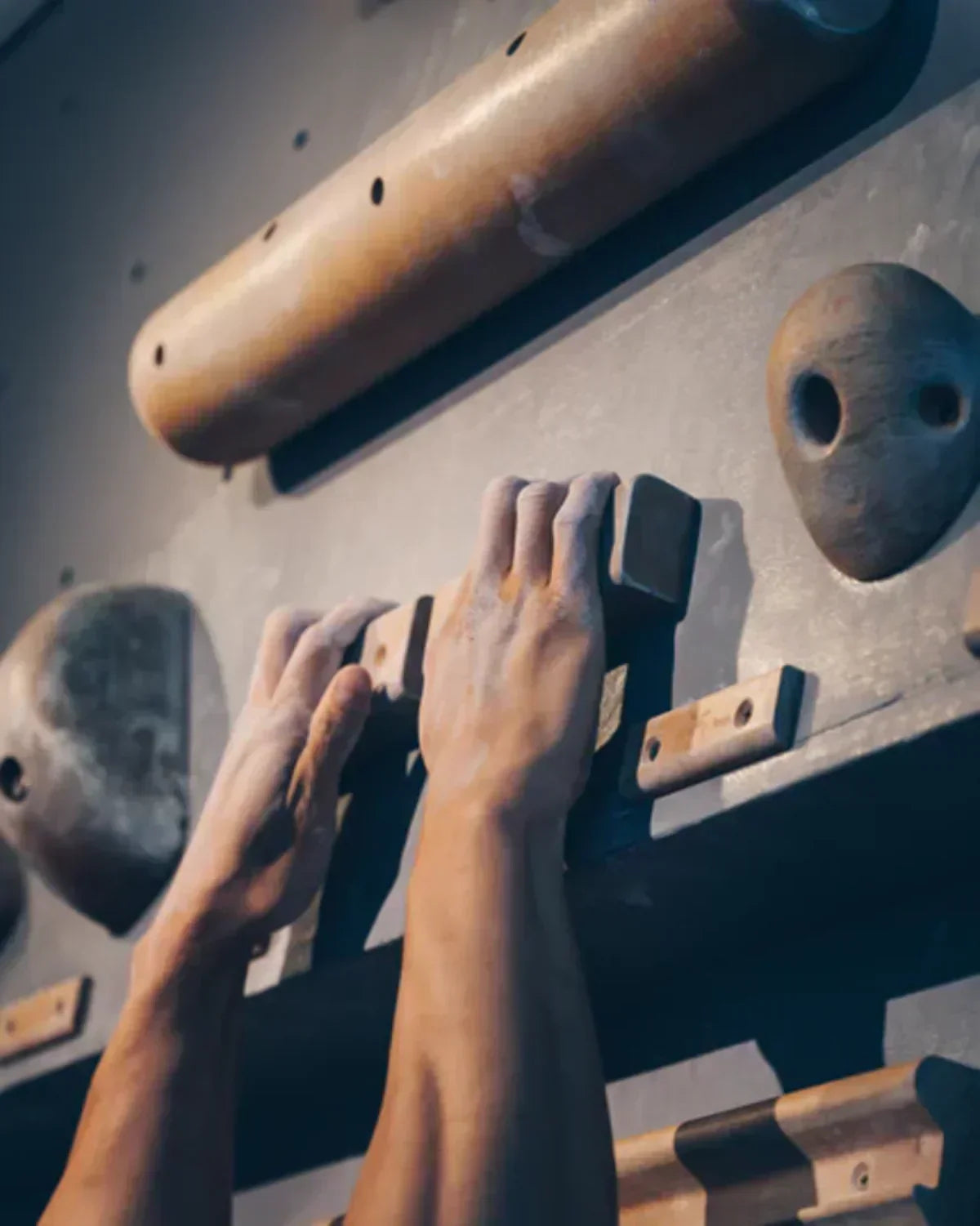
Chalk's job is to absorb surface moisture from the skin and increase friction between your fingers and the hold. It does this well — up to a point. Once the chalk layer on your skin has absorbed as much moisture as it can hold, additional chalk doesn't improve grip. It just adds bulk that can actually reduce the tactile contact between skin and hold surface.
The optimal chalk layer is thin and even — enough to manage sweat, not so much that it creates a barrier between skin and hold. Most climbers apply significantly more than this, especially in humid gyms where the instinct to chalk up more is strongest. Understanding why more chalk stops helping — and starts hurting — is the first step to using it better. For a full explanation of how chalk works chemically, see what is climbing chalk made of.
How Over-Chalking Reduces Grip

Excess chalk on the skin surface creates several grip problems. The most immediate is reduced tactile sensitivity. Climbing involves constant micro-adjustments based on feel — how much friction a hold has, where to shift weight, how close a foot is to slipping. A thick chalk layer numbs this feedback, making it harder to read holds accurately and respond in time.
The second problem is chalk transfer. Excess chalk on your hands deposits onto holds faster, building up a slick, powdery layer that reduces friction for everyone climbing that problem. Heavily chalked holds feel noticeably different from clean ones — the chalk buildup creates a smooth, almost greasy surface that reduces the grip the hold texture was designed to provide. This is why gyms with active brush policies maintain better hold quality than those without.
The third issue is clumping. In humid conditions, excess chalk absorbs ambient moisture and sweat simultaneously, forming a paste on the skin surface rather than a dry layer. This paste has worse friction properties than either clean skin or a properly applied chalk layer. Climbers who chalk heavily in humid gyms often end up with hands that feel permanently damp despite constant chalking — the excess chalk is mixing with sweat rather than absorbing it.
How Over-Chalking Damages Skin
Magnesium carbonate is mildly alkaline and drying. A thin, well-applied layer used during a session causes manageable skin drying that a basic post-session routine can offset. A thick layer applied repeatedly throughout a session — sitting on skin between attempts, absorbing into the skin surface, and being reapplied before the previous layer has worn off — causes cumulative drying that compounds across a training week.
The result is skin that becomes progressively more brittle, more prone to cracking, and slower to recover between sessions. Climbers who chalk heavily often attribute skin problems to training volume or humidity, when the chalk use itself is a significant contributing factor. Reducing chalk volume is one of the most underrated skin care interventions available, and it costs nothing.
Liquid chalk amplifies this effect due to its alcohol content. Repeated liquid chalk applications across a session expose skin to multiple rounds of alcohol drying on top of the alkaline chalk itself. Using liquid chalk as a base layer and switching to minimal powder top-ups — rather than reapplying liquid chalk throughout — significantly reduces the cumulative drying load on skin. For more on managing skin around chalk use, see the complete guide to climbing chalk in humid conditions.
The Over-Chalking Habit Loop

Over-chalking tends to self-reinforce. A climber uses too much chalk, which pastes up in humidity and reduces grip. Reduced grip feels like a chalk problem, so they chalk more. More chalk makes the paste worse. By the end of the session, hands are thoroughly coated in a mixture of chalk, sweat, and skin residue that has essentially zero friction benefit.
Breaking this loop requires trusting that less chalk, applied correctly, will outperform more chalk applied carelessly. The evidence is usually immediate — a single session of deliberate, minimal chalking in the same gym conditions often produces better grip consistency than the heavy-chalking approach, once the initial discomfort of the habit change passes.
The practical test: chalk up normally for your first attempt, then note how grip feels at the start versus the end of the attempt. If grip is already degrading mid-attempt despite fresh chalk, the issue is sweat rate outpacing the chalk layer — and the solution is better chalk choice, not more chalk. See how to choose climbing chalk for your skin type for guidance on matching chalk to sweat rate.
What Minimal Chalking Actually Looks Like
Minimal chalking isn't about avoiding chalk or toughing out damp hands. It's about applying the right amount at the right time and letting it do its job before reaching for more.
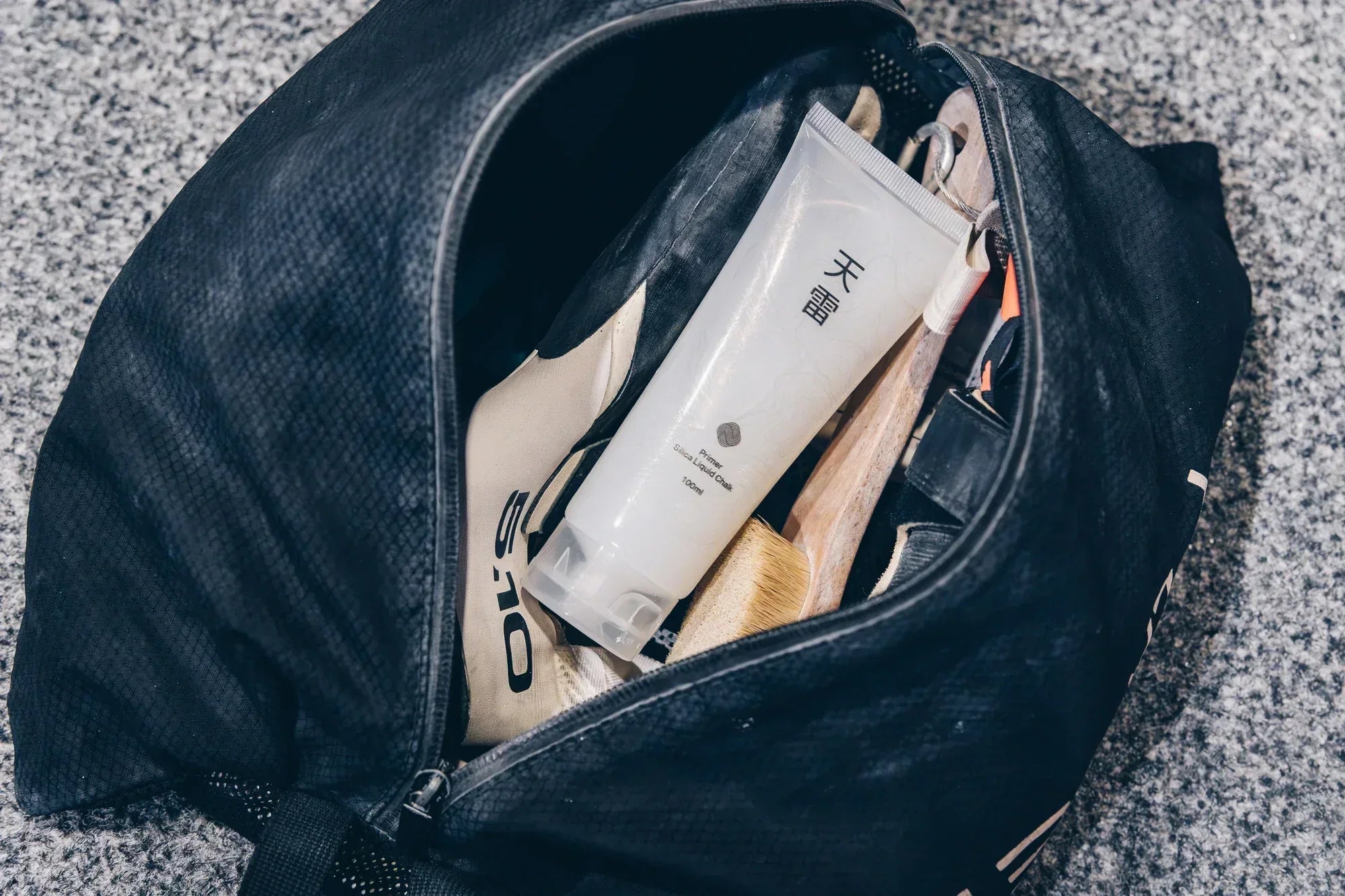
For a bouldering session in a humid gym, the approach looks like this: apply Thunder liquid chalk as a base before your first attempt and let it set fully. Between attempts, wipe hands lightly on pants to remove sweat, then apply a light dusting of Kumo powder — enough to feel dry, not enough to see a visible white coat. Reapply the liquid chalk base only when the base layer has clearly broken down, not out of habit before every go.
Most climbers who switch to this approach use significantly less chalk per session and report better grip consistency, particularly in the second half of sessions when heavy chalking typically causes the most problems. For full application guidance, see how to use liquid chalk properly.
Chalk and Gym Etiquette
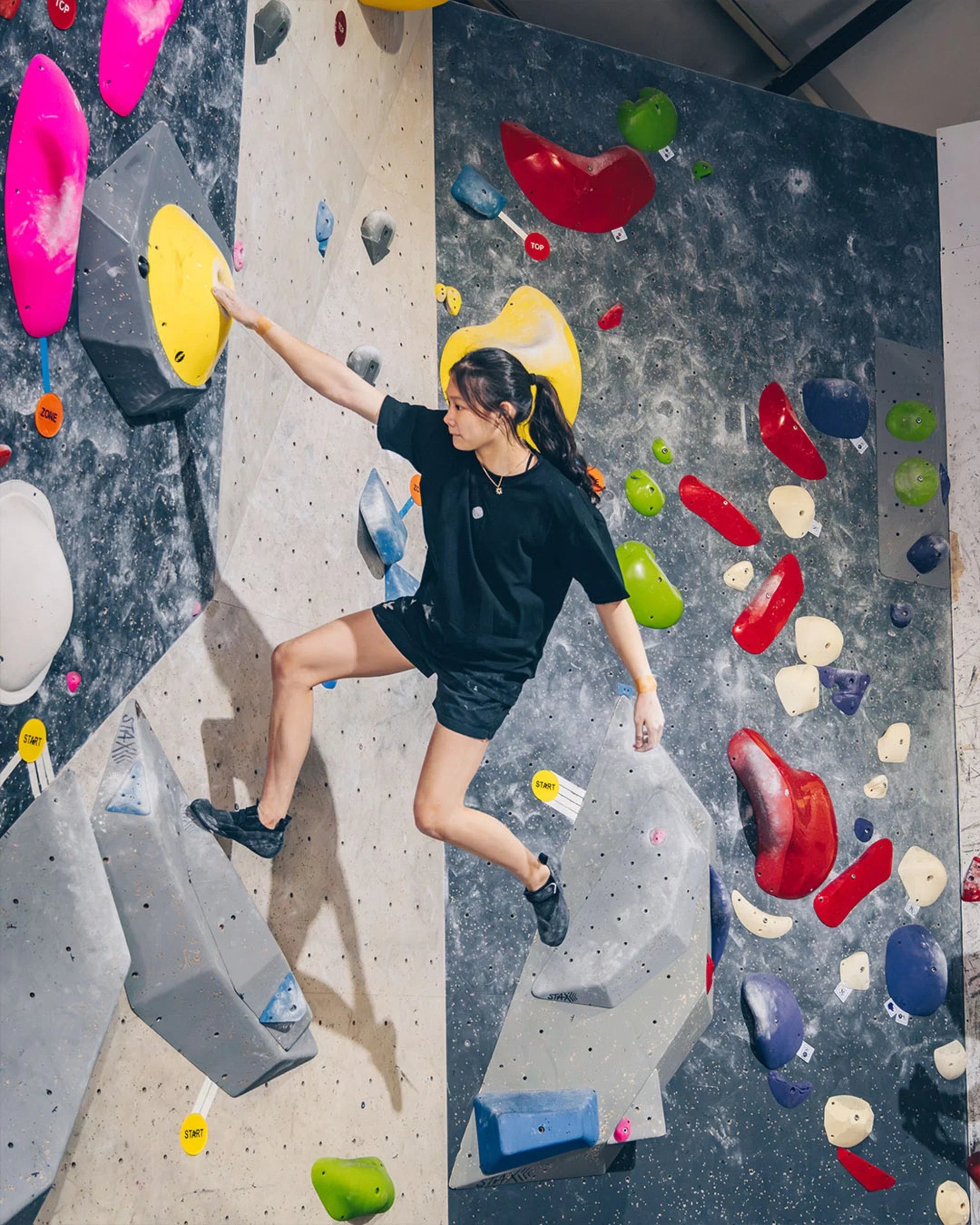
Over-chalking isn't just a personal performance issue. Excess chalk on holds degrades the experience for every climber on that problem. Chalk buildup on small edges, slopers, and textured volumes changes how they feel and reduces the grip they were designed to provide. Gyms spend significant time and effort brushing holds — climbers who chalk minimally extend the time between brush cycles and maintain better hold quality for the whole gym.
In gyms with chalk restrictions or chalk ball requirements, the policy exists precisely because of the hold degradation caused by heavy loose chalk use. Climbing lightly on chalk isn't just better for your own performance — it's considerate to the community using the same walls.
Key Takeaways
- Chalk improves grip up to a point — beyond that, excess chalk reduces tactile sensitivity and pastes up with sweat
- Heavy chalking accelerates skin drying and cracking, compounding across a training week
- The over-chalking habit loop is self-reinforcing — more chalk feels like the solution but often makes grip worse
- Minimal chalking means applying the right amount deliberately, not avoiding chalk altogether
- A liquid chalk base plus light powder top-ups outperforms heavy repeated powder application in humid conditions
- Less chalk on hands means less chalk on holds — better for grip quality across the whole gym

Share:
How to Choose Climbing Chalk for Your Skin Type
The Complete Guide to Climbing Chalk — Types, Uses, and How to Choose